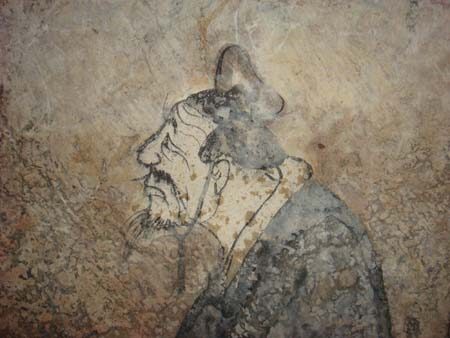
Life
Confucius in their own century
Kongzi, known in the West as Confucius, came from Lu during the late Spring and Autumn period, served in minor offices, travelled among courts seeking reform, and taught disciples whose recollections were later gathered as the Analects.
He lived amid the weakening Zhou order, when hereditary ritual forms no longer guaranteed political virtue. His answer was not withdrawal but restoration through cultivated persons and exemplary rule.
Central ideas
Ren
Ren is humane concern, the relational virtue that makes authority and family obligation more than obedience.
Li
Li names ritual propriety: patterned conduct that educates desire, honours roles and makes social life legible.
Junzi
The junzi, or exemplary person, is formed through study, self-correction and careful speech rather than through birth alone.
Criticism & debate
Critics argue that Confucian role ethics can reinforce hierarchy, patriarchy and deference; defenders answer that reciprocal obligation and humane rule place moral demands on every role, especially rulers.
Influence
The Analects became a central text across China, Korea, Japan and Vietnam, shaping education, bureaucracy, ethics and family life for more than two millennia.
How to read them
Begin Confucius with the tension between ren and li. Read the major works slowly enough to notice how biography, public crisis and method shape the argument rather than treating the thinker as a list of doctrines.
If Confucius is right about ren, what habit of judgement would have to change first?
In their words
“To learn and at due times to repeat what one has learnt, is that not after all a pleasure?”