Objects & Myth
Art & Myth
Sculpture, pottery, mosaic, and monuments from documented collections and archaeological sites. Every work below is historical; none is a modern reconstruction.
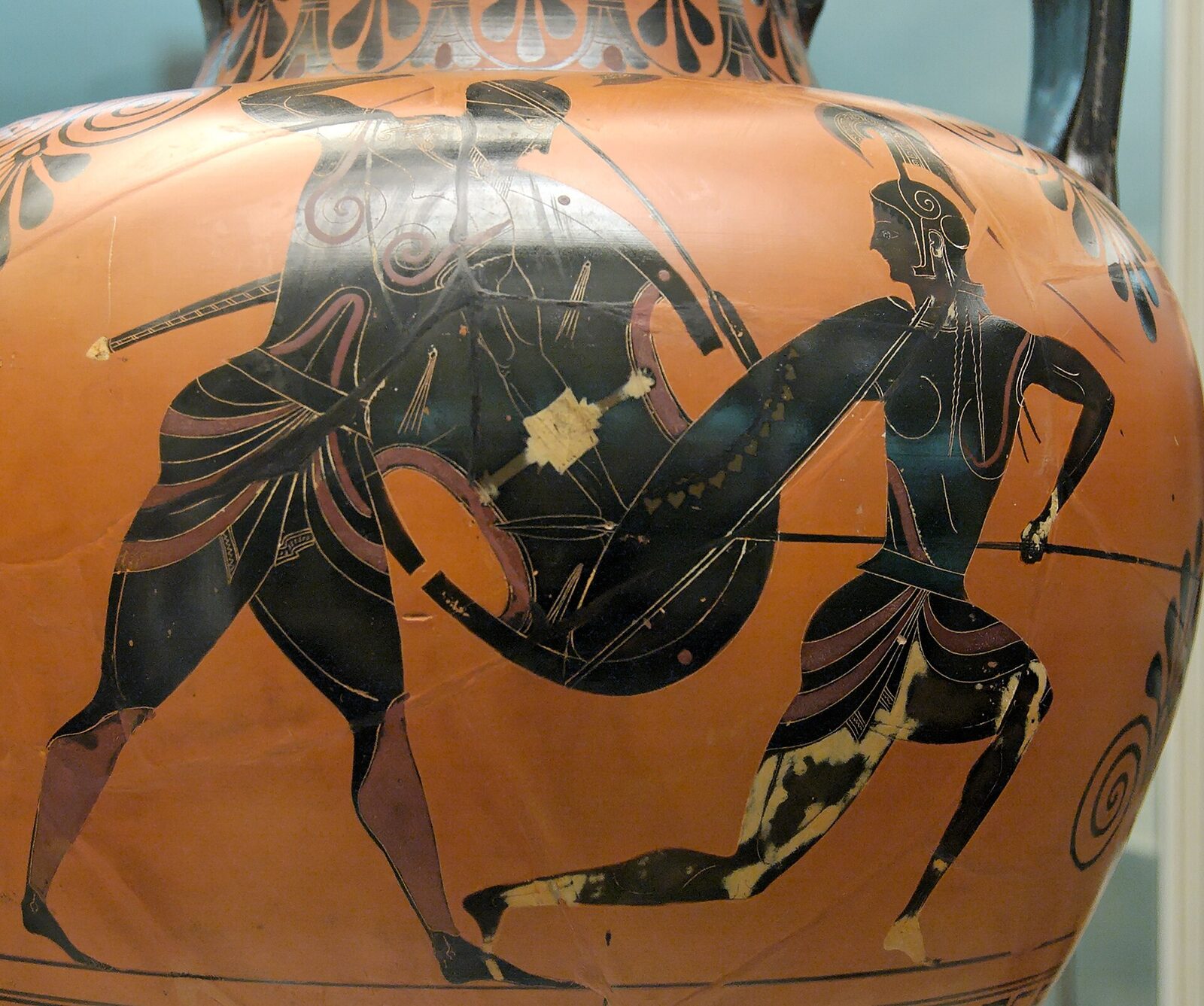
Achilles and Penthesileia
c. 540–530 BCE
Attic black-figure amphora, potter signed Exekias
British Museum, London
The duel of Achilles and the Amazon queen, a scene from the epic tradition around the Trojan War.
Mythic thread
Achilles kills Penthesileia in battle and, in later tellings, recognises her beauty at the moment of death — a tragic compression of glory, violence and belated recognition.
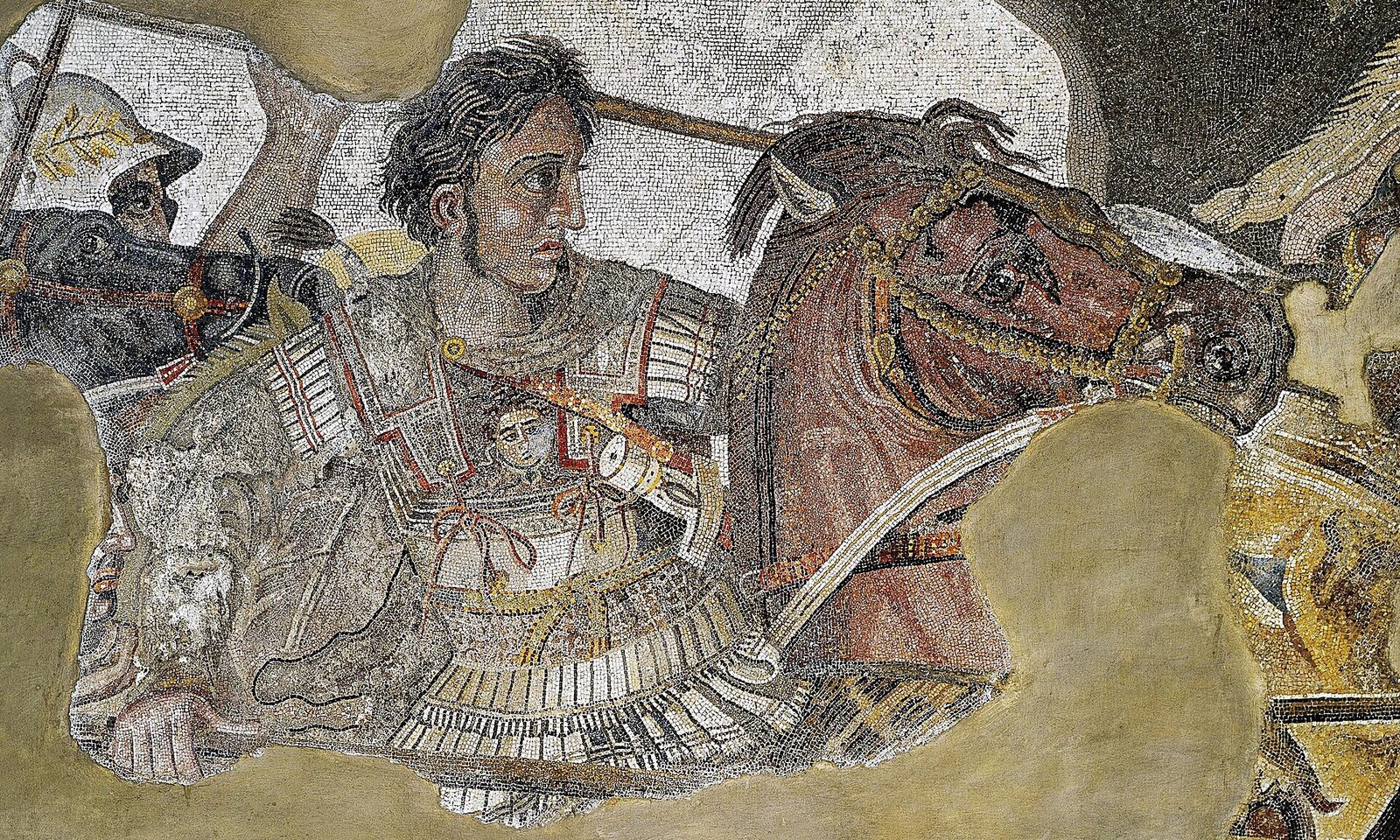
Alexander Mosaic (detail)
c. 100 BCE
Roman floor mosaic, House of the Faun, Pompeii
National Archaeological Museum, Naples
Alexander at battle against Darius III, probably after a Hellenistic painting.
Mythic thread
Though Alexander was historical, the image borrows heroic visual language: the conqueror appears almost like a new Achilles driving eastward under the pressure of epic memory.
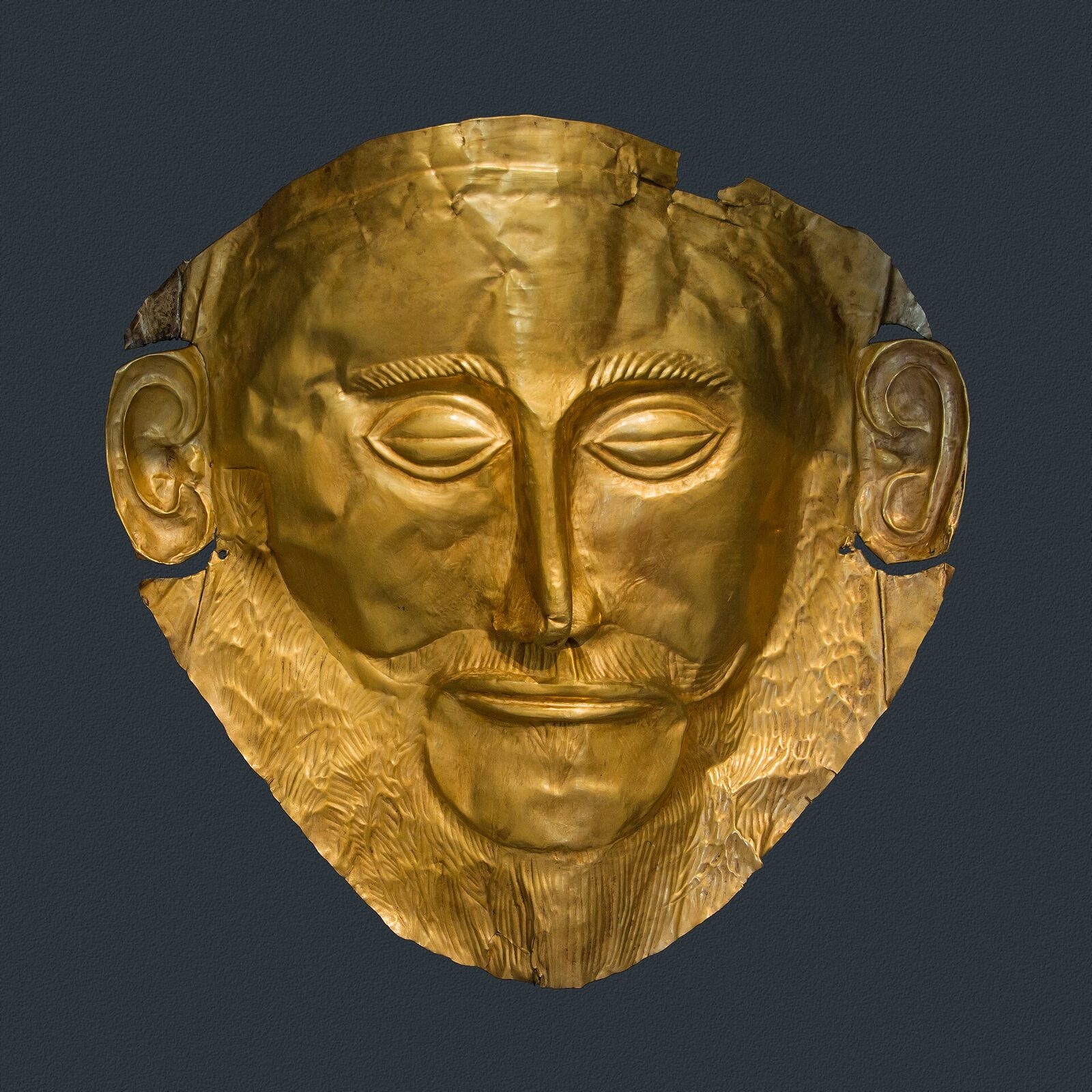
Funeral mask known as the “Mask of Agamemnon”
16th century BCE
Gold, found in Grave V at Mycenae (Schliemann, 1876)
National Archaeological Museum, Athens
The Homeric name is Schliemann’s attribution, not an ancient identification.
Mythic thread
Agamemnon, commander of the Greeks at Troy, belongs to Homeric legend; the mask is much older, reminding viewers how archaeology and myth can be powerfully but misleadingly joined.
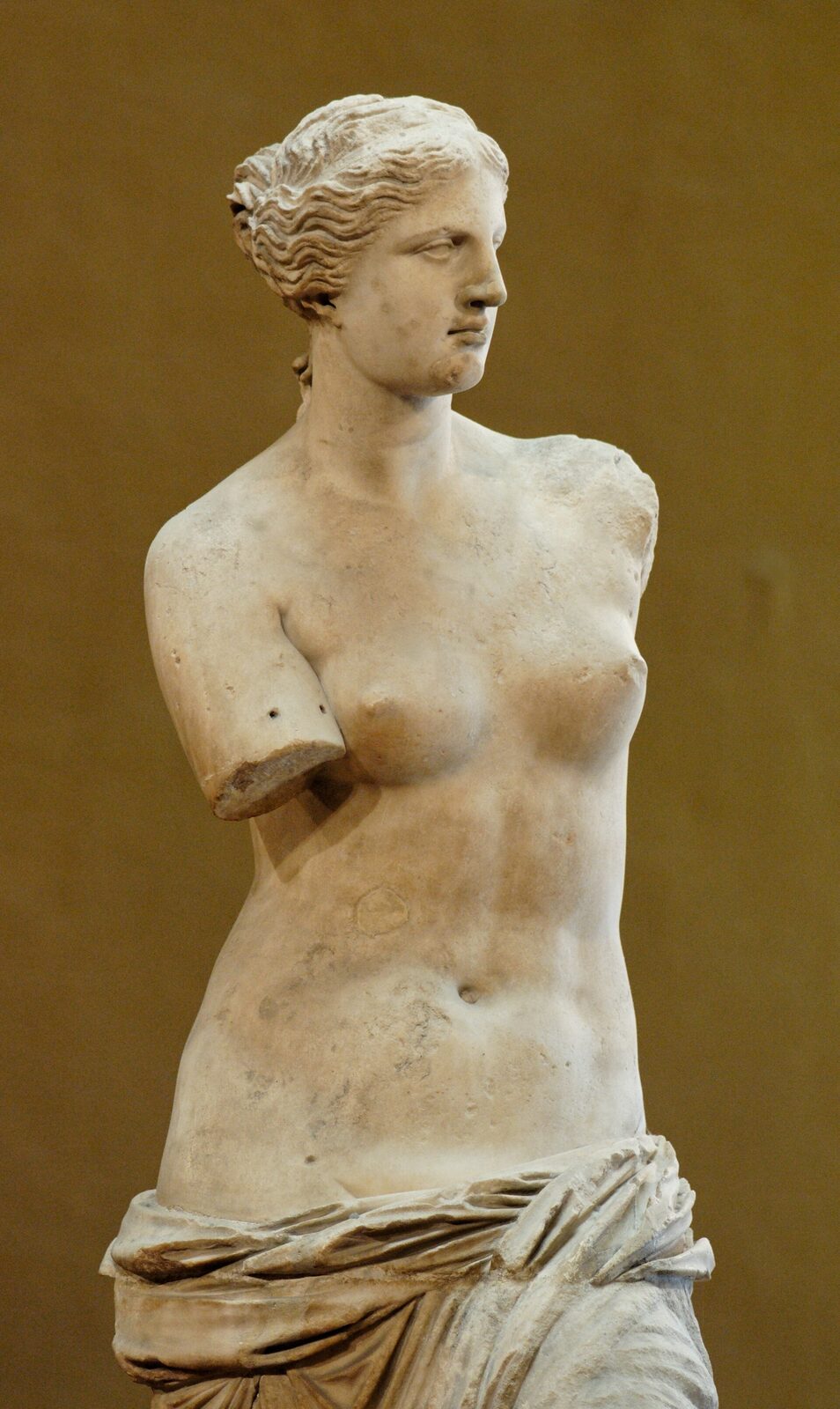
Aphrodite of Melos (“Venus de Milo”)
c. 130–100 BCE
Parian marble, found on Melos in 1820
Louvre Museum, Paris
One of the defining Hellenistic images of the goddess.
Mythic thread
Aphrodite’s myths join desire, beauty, persuasion and rivalry, from the Judgement of Paris to the birth stories that made sea-foam itself a divine origin.
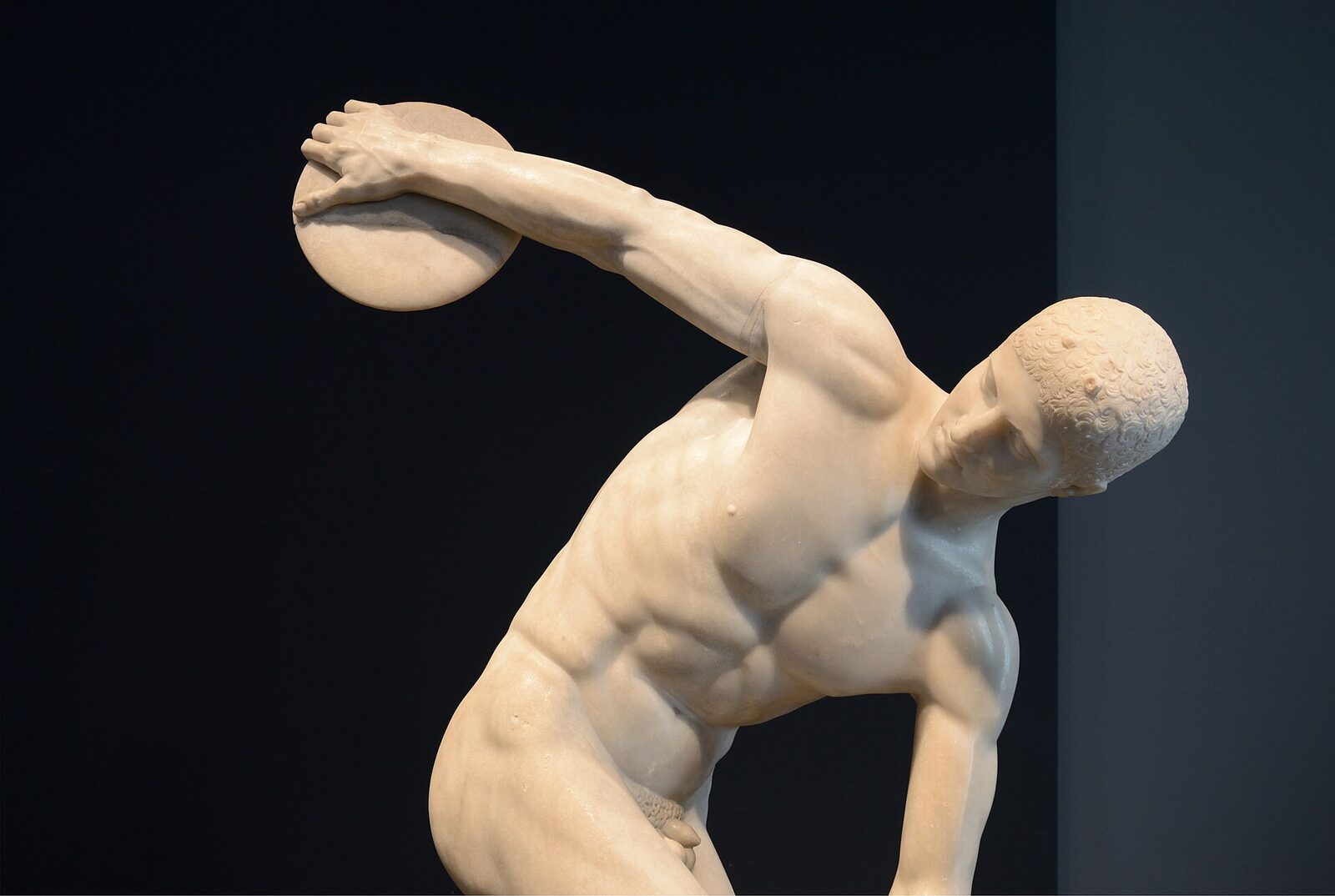
Discobolus
Roman copy after a Greek bronze of c. 460–450 BCE
Marble, after Myron
National Roman Museum, Rome
Photograph by Livioandronico2013, CC BY-SA 4.0.
Mythic thread
The discus thrower is not a mythic hero but an idealised athletic body, connecting sculpture to games held under divine patronage and to Greek ideas of measured excellence.
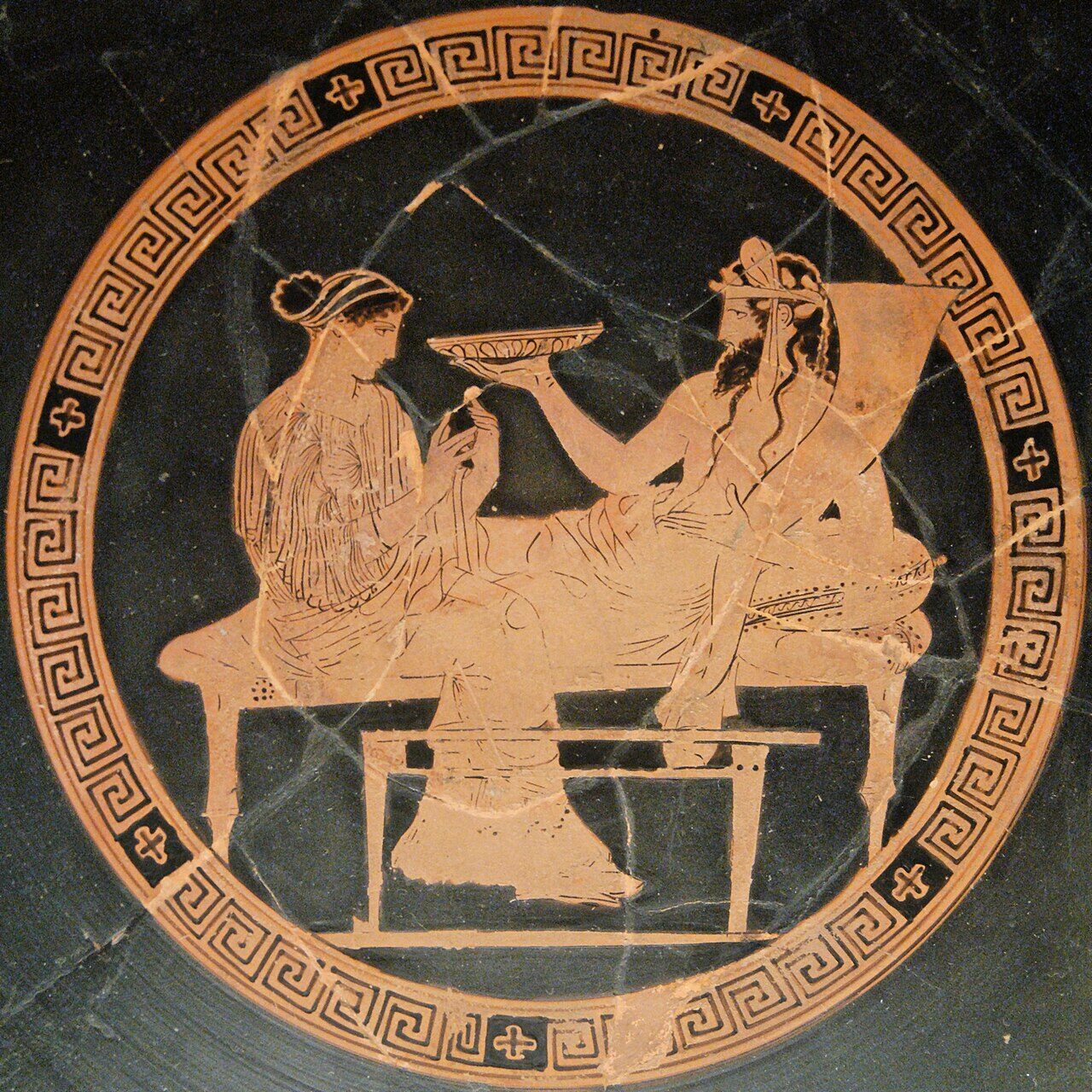
Attic red-figure kylix with Persephone and Hades
c. 440–430 BCE
Attributed to the Codrus Painter
British Museum, London
Myth as it was actually seen: painted on objects for daily use.
Mythic thread
Persephone’s descent and seasonal return gave Greek art a way to picture loss, fertility and the fragile boundary between worlds.
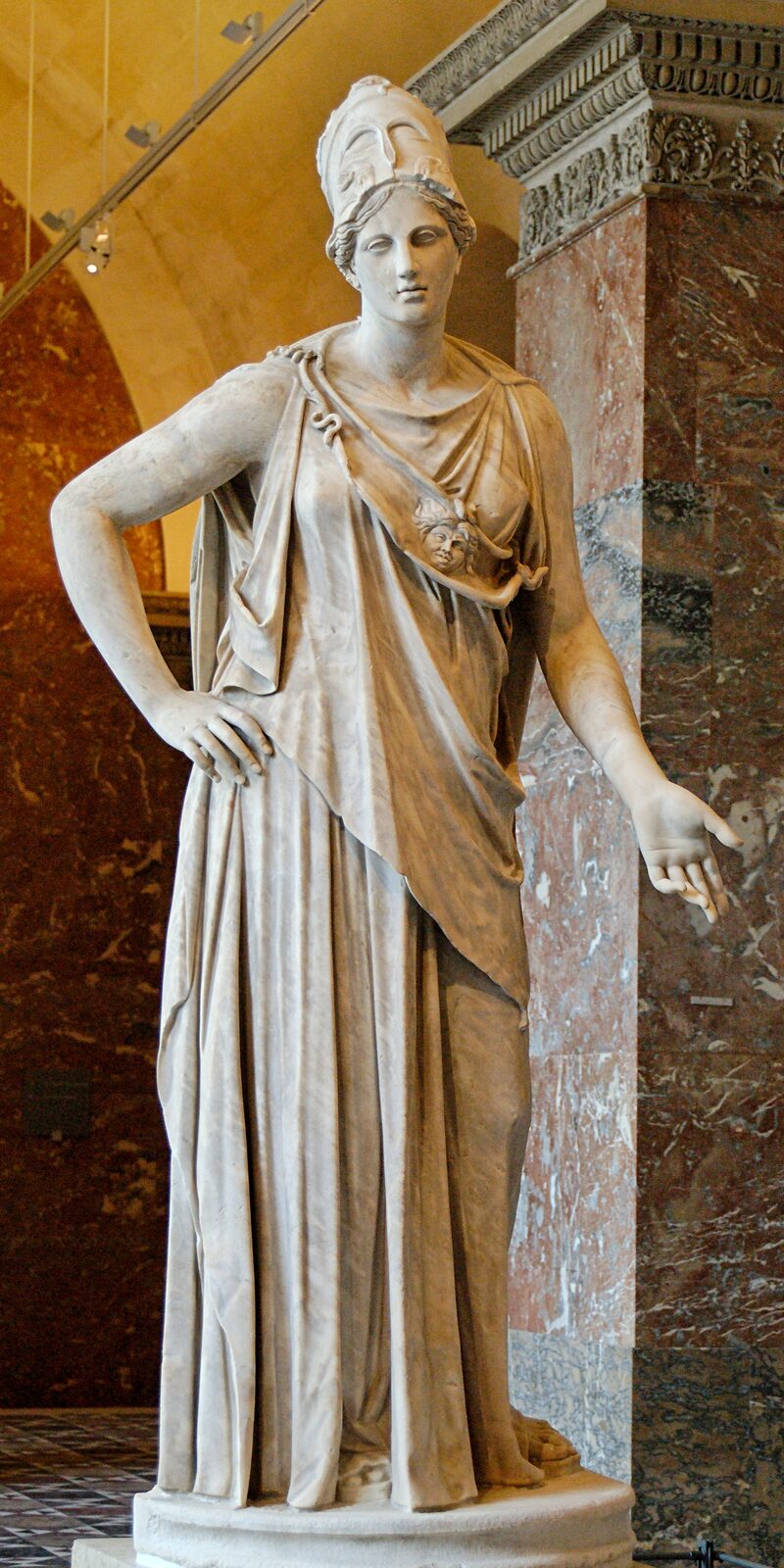
Athena Mattei
Roman copy after a Greek original of the 4th century BCE
Marble statue of Athena, Mattei type
Louvre Museum, Paris
The armed goddess appears as patron of craft, strategy and civic intelligence rather than as a figure of brute war.
Mythic thread
Athena sprang fully armed from the head of Zeus and became the protector of Athens after giving the city the olive tree.
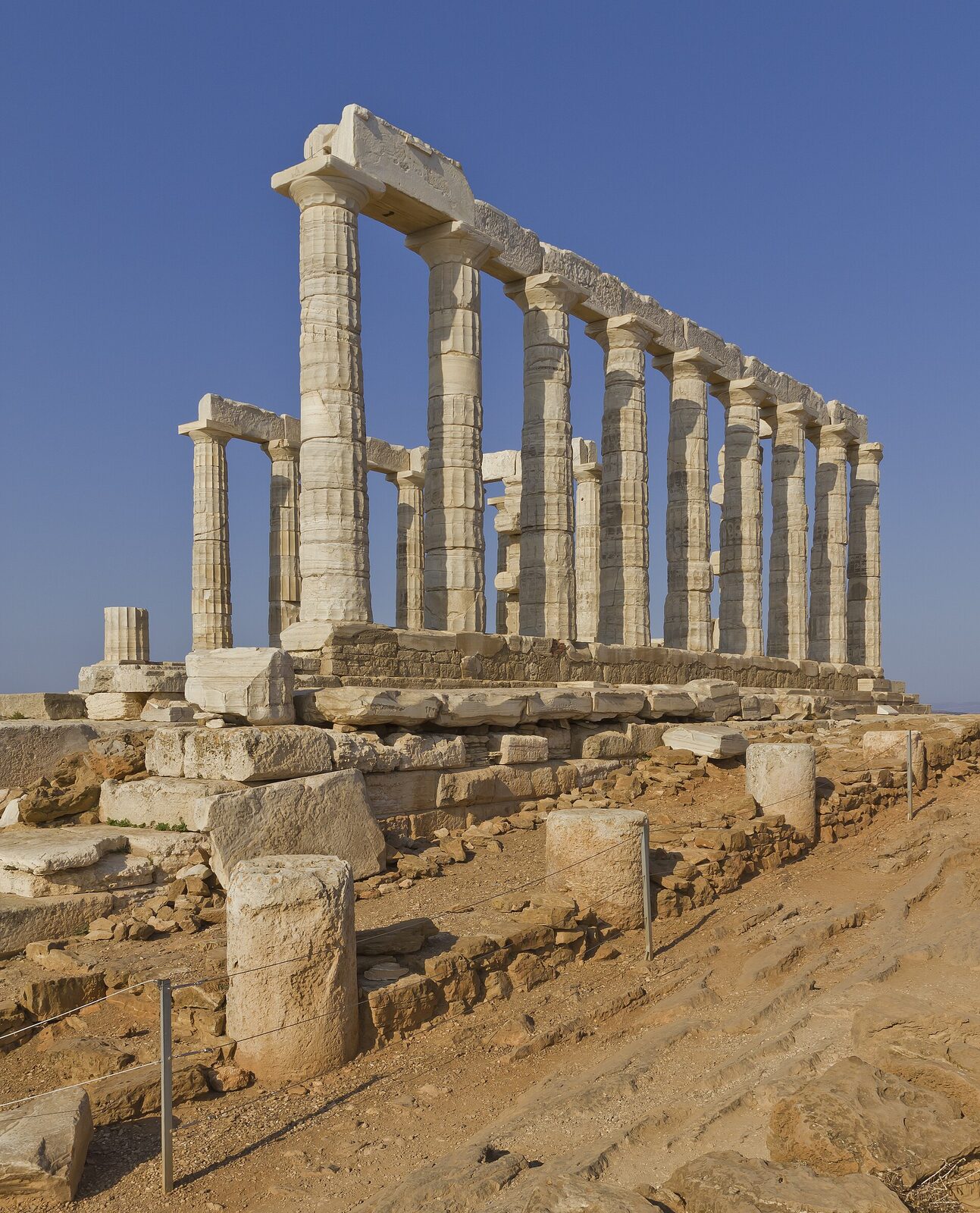
Temple of Poseidon at Sounion
5th century BCE
Doric marble temple on the Attic headland
Cape Sounion, Attica
The sanctuary marks the sea route into Athens and anchors Poseidon’s mythic authority in a real navigational landmark.
Mythic thread
Aegeus was said to have thrown himself from this coast when he saw Theseus’ black sail returning from Crete, giving the Aegean its mythic name.

Portara of Naxos
begun c. 530 BCE
Marble gateway of an unfinished Ionic temple, traditionally linked to Apollo
Naxos, Cyclades
The standing doorway turns the island horizon into a frame, a ruin where architecture and sea remain inseparable.
Mythic thread
Naxos is tied to Ariadne, abandoned by Theseus and later joined to Dionysus in one of the island’s enduring myth cycles.
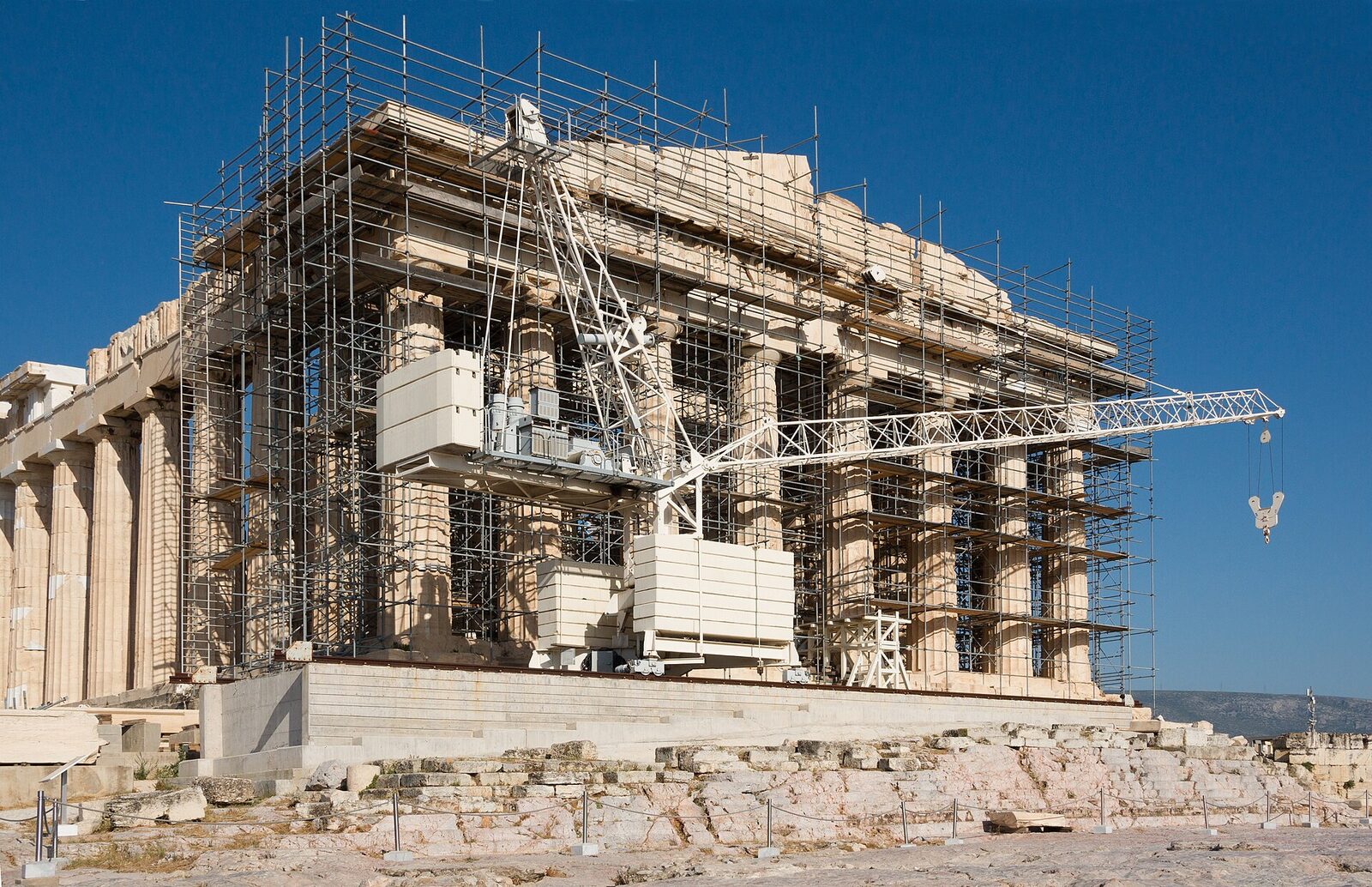
Parthenon on the Athenian Acropolis
447–432 BCE
Iktinos and Kallikrates, with sculptural programme associated with Pheidias
Acropolis of Athens
A civic monument to Athena Parthenos, binding imperial Athens, ritual procession and sculptural myth into stone.
Mythic thread
Its imagery gathers Athena, the gods, heroic combat and civic procession into a public language of divine favour and political ambition.
Greek myths
Stories carried by temples, pottery, theatre, and memory.
- Persephone and DemeterHymn to Demeter, tr. Hugh G. Evelyn-White
- Theseus and the MinotaurTheseus and Daedalus, retold by Thomas Bulfinch
- Prometheus and FireThe Theogony, tr. Hugh G. Evelyn-White
- Orpheus and EurydiceOrpheus and Eurydice, retold by Thomas Bulfinch
- Daedalus and IcarusTheseus and Daedalus, retold by Thomas Bulfinch
- Athena and ArachneMinerva and Arachne, retold by Thomas Bulfinch
- PandoraWorks and Days, tr. Hugh G. Evelyn-White
- The Return of the HeraclidsThe History, Book 8, tr. George Rawlinson
- The House of Atreus and the War at TroyThe Trojan War, retold by Thomas Bulfinch
- The Return of the Heraclids to LaconiaThe History, Book 6, tr. George Rawlinson
- The Ionian MigrationThe History, Book 1, tr. George Rawlinson
- The Head of Orpheus on LesbosOrpheus and Eurydice, retold by Thomas Bulfinch
- Endymion at Mount LatmusEndymion, retold by Thomas Bulfinch
- Croesus and the Ambiguous OracleThe History, Book 1, tr. George Rawlinson
- The Argeads Descend from HeraclesThe History, Book 8, tr. George Rawlinson