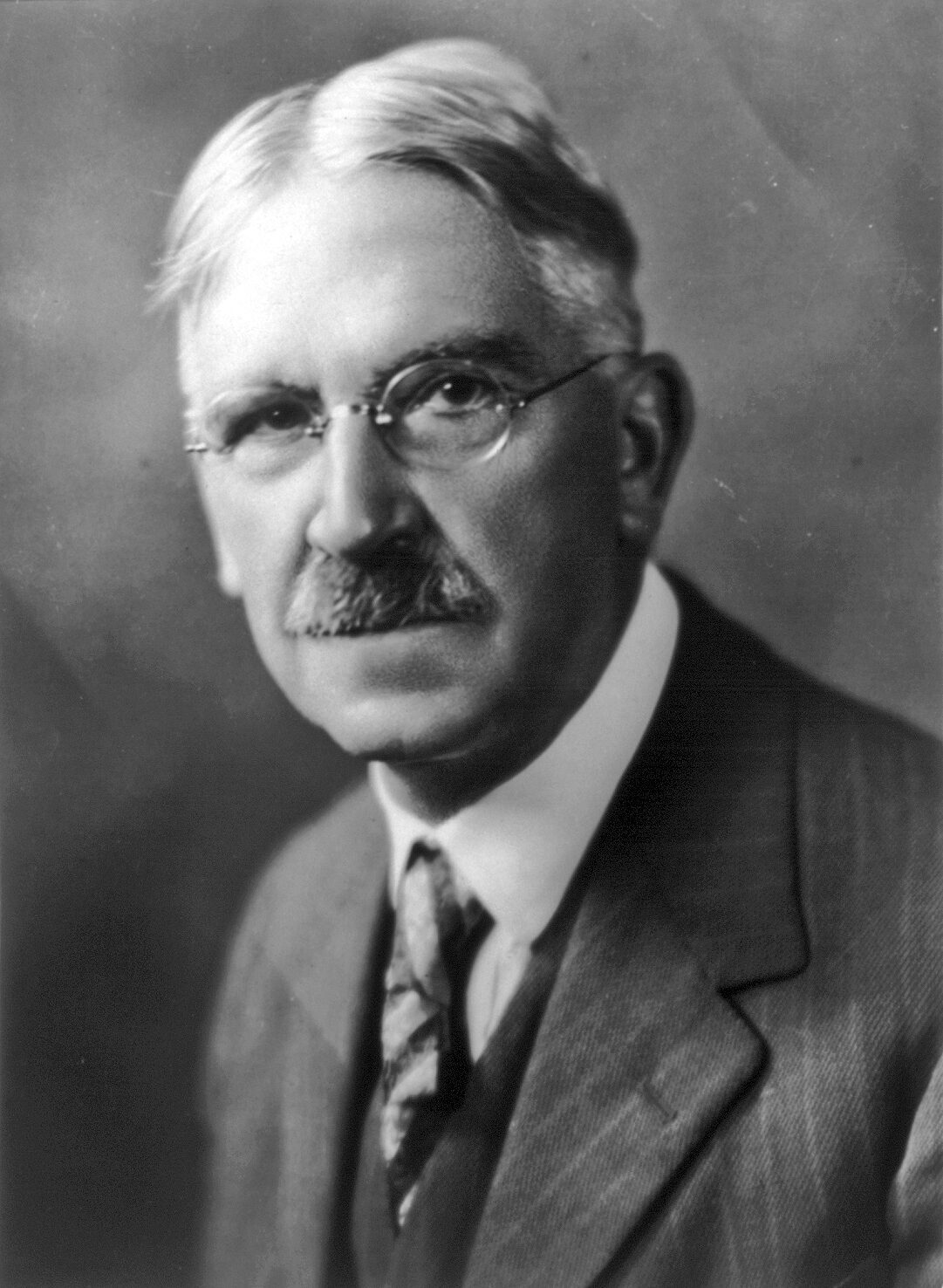
Life
John Dewey in their own century
Born in Vermont, Dewey taught at Michigan, Chicago and Columbia, founded a laboratory school, wrote across psychology, education, aesthetics and politics, and remained publicly engaged for seven decades.
Industrial cities, immigration, mass schooling and progressive reform shaped his thought. Democracy for Dewey is not only voting but a shared habit of inquiry learned through institutions.
Central ideas
Inquiry
Thinking begins in an unsettled situation and tests hypotheses by transforming it; ideas are instruments before they are ornaments.
Democracy as life
Democracy is a mode of associated living in which communication and participation make intelligence social rather than private.
Education through experience
Education should organise experience so that learners become capable of further growth, not merely receive inert information.
Criticism & debate
Critics claim his optimism about growth underplays conflict, tragedy and entrenched power, and conservatives often objected that progressive education weakened discipline.
Influence
He shaped educational theory, public philosophy, democratic experimentalism and later design-thinking approaches to social problems.
How to read them
Begin John Dewey with the tension between inquiry and democracy as life. Read the major works slowly enough to notice how biography, public crisis and method shape the argument rather than treating the thinker as a list of doctrines.
If John Dewey is right about inquiry, what habit of judgement would have to change first?
In their words
“Education is a process of living and not a preparation for future living.”