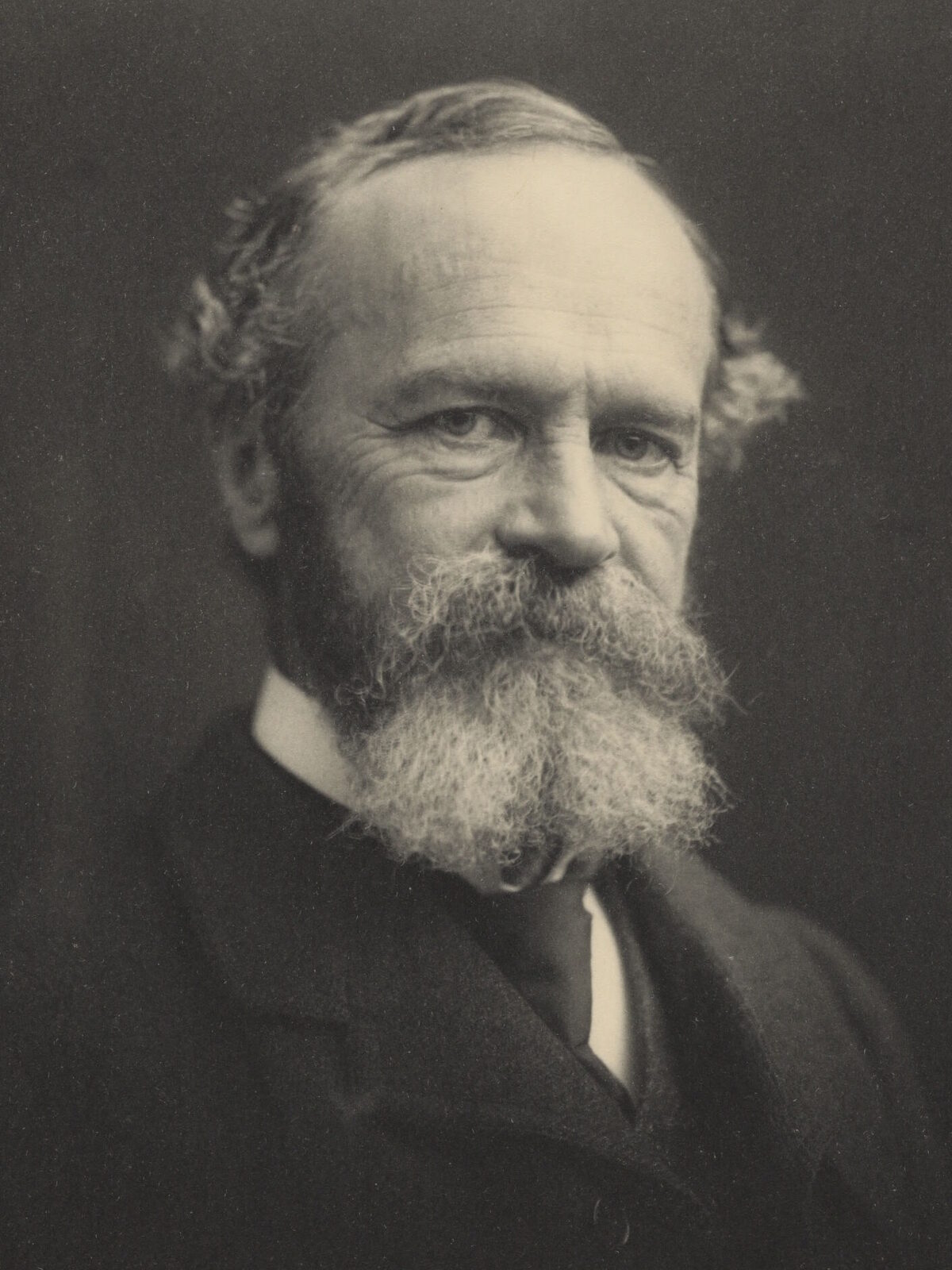
Life
William James in their own century
Raised in a restless transatlantic family, James studied medicine, taught physiology and psychology at Harvard, published The Principles of Psychology in 1890, and then became pragmatism’s most popular philosophical voice.
He wrote in an American intellectual culture shaped by Darwin, experimental psychology, religious pluralism and democratic impatience with inherited systems.
Central ideas
Pragmatic meaning
To understand an idea, ask what practical difference would follow if it were true; empty disputes shrink when no difference can be found.
Will to believe
In some forced, living and momentous choices, refusing belief is itself a choice, so evidence cannot always be waited for from a neutral distance.
Radical empiricism
Experience includes relations as well as discrete sensations, allowing continuity, purpose and value to be described without leaving experience behind.
Criticism & debate
Critics worry that pragmatism makes truth too close to usefulness and that his defence of belief can shelter wishful thinking when evidence is thin.
Influence
James shaped American philosophy, psychology, religious studies and later pluralist accounts of truth and temperament.
How to read them
Begin William James with the tension between pragmatic meaning and will to believe. Read the major works slowly enough to notice how biography, public crisis and method shape the argument rather than treating the thinker as a list of doctrines.
If William James is right about pragmatic meaning, what habit of judgement would have to change first?
In their words
“Truth happens to an idea.”