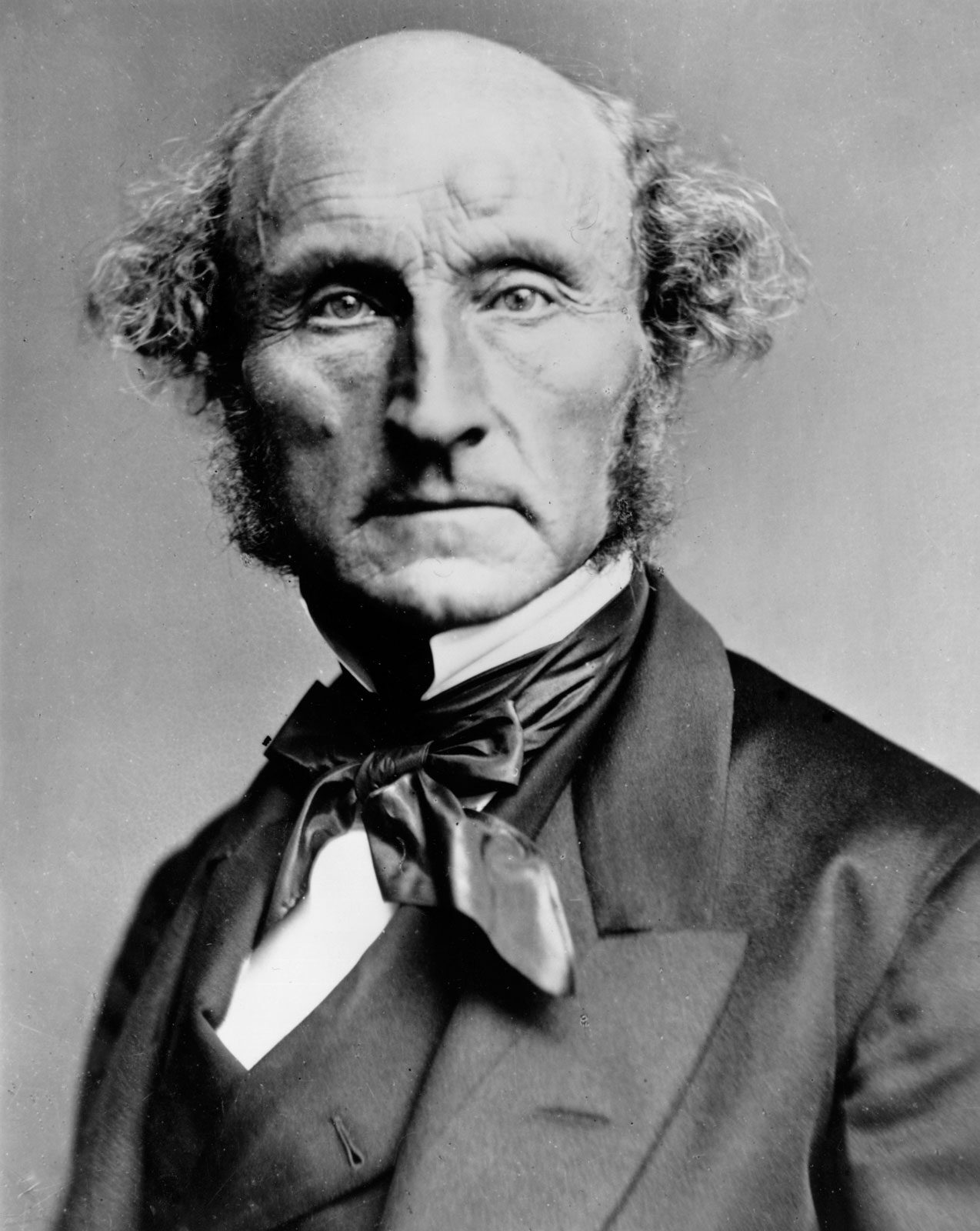
Life
John Stuart Mill in their own century
Educated intensively by his father James Mill and Jeremy Bentham’s circle, Mill suffered a mental crisis in youth and later worked for the East India Company while publishing essays, logic, political economy and parliamentary speeches. Harriet Taylor Mill was his intellectual partner, especially on liberty and equality.
He wrote in Victorian Britain amid industrial change, empire, expanding literacy and agitation for parliamentary reform. His liberalism tries to protect experiment in living without abandoning public welfare.
Central ideas
Greatest happiness
Utility asks for the greatest happiness overall, but Mill distinguishes higher pleasures and makes competent judgement part of the measure.
Individuality
Individuality is not decoration; it is a condition of discovery, because ways of life must be tried before society knows what human flourishing can be.
Harm principle
Coercion is justified only to prevent harm to others, not to enforce moral dislike or protect adults from their own chosen risks.
Criticism & debate
Critics question whether utility can really protect rights when aggregate happiness points elsewhere, and whether his defence of liberty was compromised by imperial assumptions.
Influence
He remains central to liberal democracy, free-speech theory, consequentialist ethics and feminist political thought.
How to read them
Begin John Stuart Mill with the tension between greatest happiness and individuality. Read the major works slowly enough to notice how biography, public crisis and method shape the argument rather than treating the thinker as a list of doctrines.
If John Stuart Mill is right about greatest happiness, what habit of judgement would have to change first?
In their words
“Over himself, over his own body and mind, the individual is sovereign.”
“It is better to be a human being dissatisfied than a pig satisfied.”