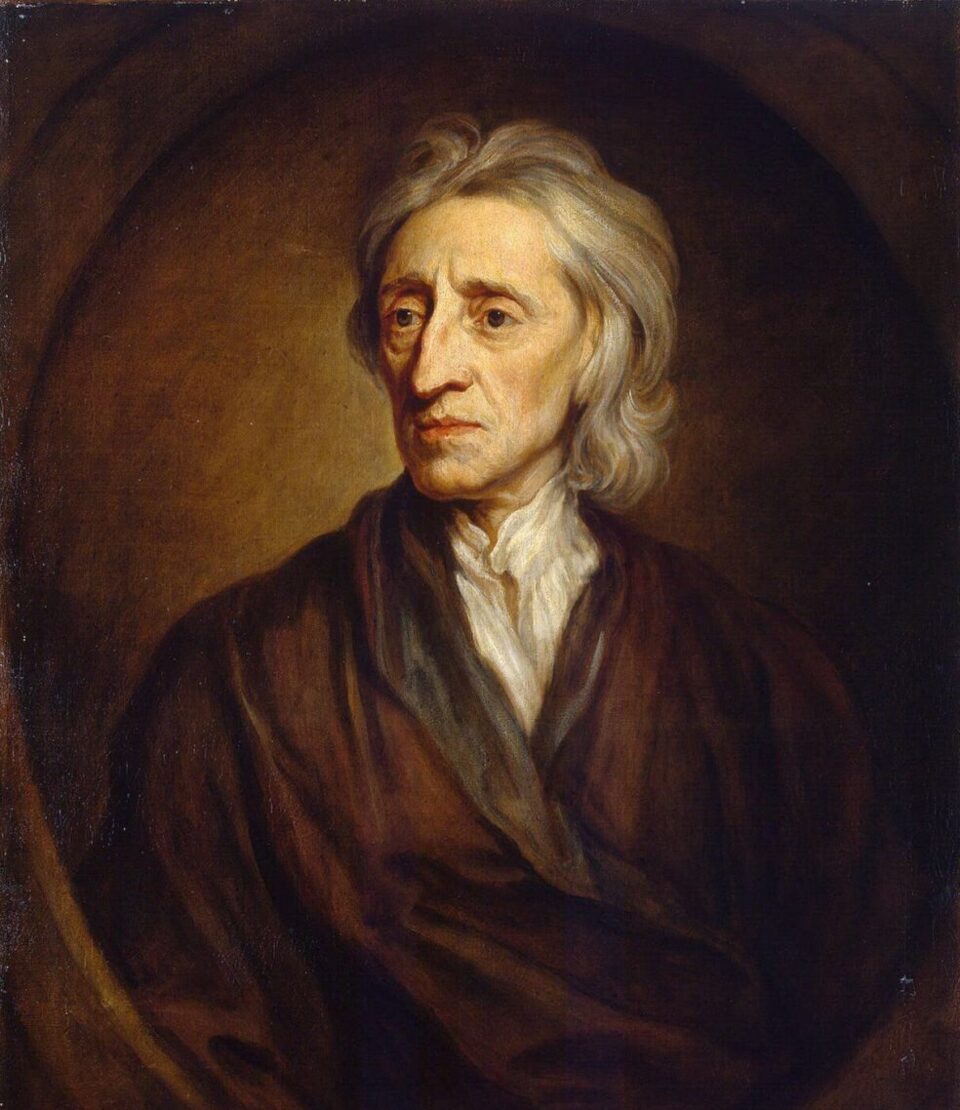
Life
John Locke in their own century
Trained in medicine at Oxford, Locke became physician and adviser to the Earl of Shaftesbury, fled to the Netherlands during the Exclusion Crisis, and published his major works after the Revolution of 1688.
His politics answers the English constitutional crises of his lifetime, while his involvement with the Carolina proprietors and the slave trade sits in unresolved tension with his doctrine of natural rights.
Central ideas
Tabula rasa
The mind begins without innate principles; all its materials come from sensation and reflection, which makes education and habit decisive.
Natural rights
Life, liberty and property belong to persons before government, so legitimate authority is limited, conditional and revocable.
Personal identity
Identity over time is continuity of consciousness rather than of soul or body — the starting point for every later puzzle about persons.
Criticism & debate
Leibniz replied that a blank mind could not organise experience at all; his labour theory of property has been read as a justification of colonial appropriation, and his own investment in slavery contradicts his premises.
Influence
He shaped Enlightenment epistemology, the American founding documents, and the liberal tradition from Mill to Rawls.
How to read them
Begin John Locke with the tension between tabula rasa and natural rights. Read the major works slowly enough to notice how biography, public crisis and method shape the argument rather than treating the thinker as a list of doctrines.
If John Locke is right about tabula rasa, what habit of judgement would have to change first?
In their words
“The mind is at first what we may call white paper, void of all characters.”
“No man’s knowledge here can go beyond his experience.”