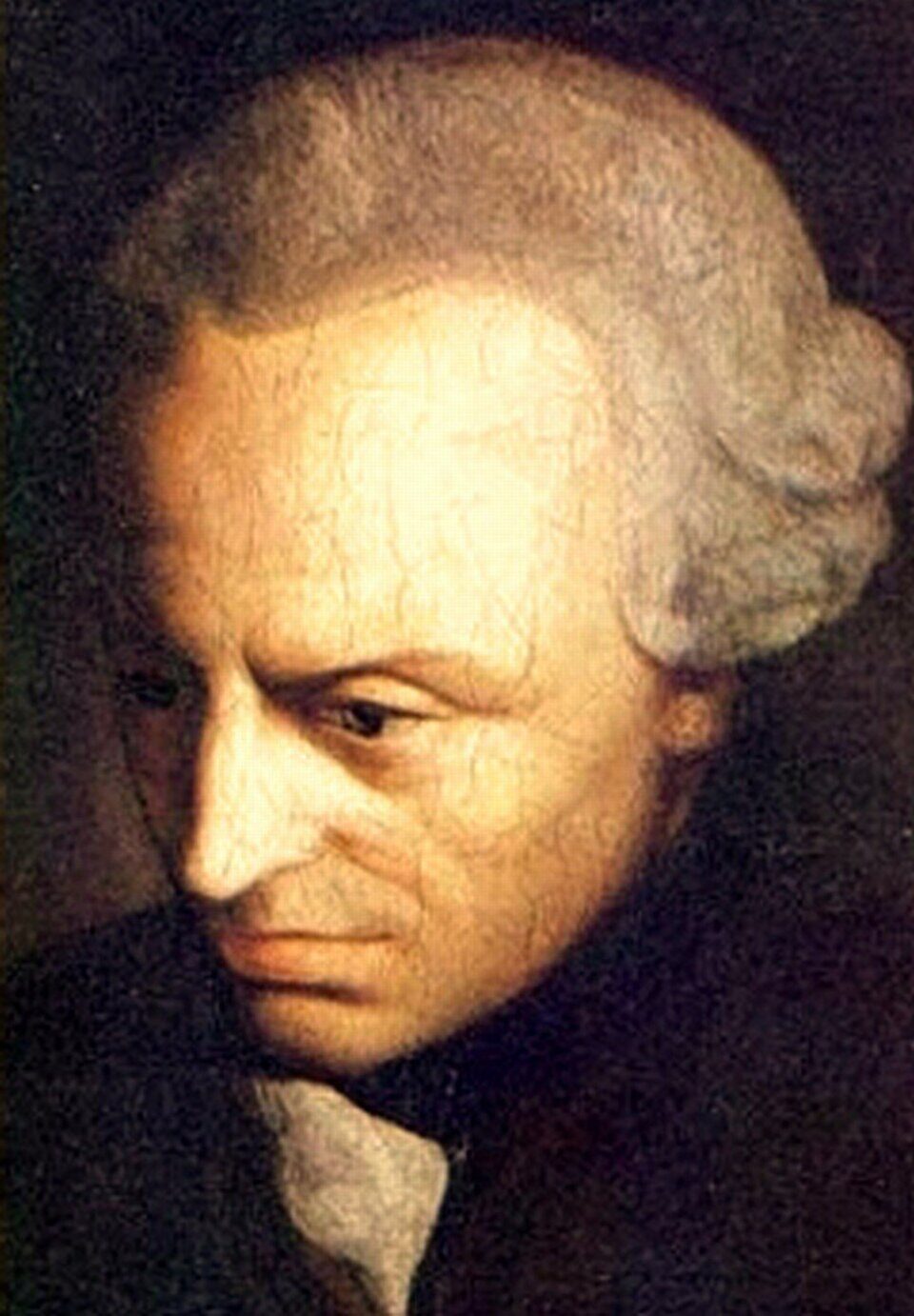
Life
Immanuel Kant in their own century
Kant spent his entire life in and around Königsberg, lecturing on everything from geography to anthropology, and published the Critique of Pure Reason at fifty-seven after a decade of silence.
He wrote in a Prussia of enlightened absolutism and censorship — his essay on enlightenment praises Frederick II while defending public reason, and a royal order later forbade him to write on religion.
Central ideas
Categorical imperative
Act only on a principle you could will everyone to follow, and treat persons never merely as means: morality is tested by form, not by outcome.
Conditions of experience
Space, time and the categories are contributions of the knowing subject, so we know appearances as structured by us, never things as they are in themselves.
Autonomy
A will is free when it legislates the moral law to itself; obedience to an external command, even a divine one, is not yet morality.
Criticism & debate
Hegel charged that the unknowable thing-in-itself is incoherent; critics from Constant onward press the rigidity of the prohibition on lying, and his writings on race and on women are prejudiced and have been rightly challenged.
Influence
He divides modern philosophy: idealism, neo-Kantianism, phenomenology, Rawlsian liberalism and contemporary human-rights language all descend from him.
How to read them
Begin Immanuel Kant with the tension between categorical imperative and conditions of experience. Read the major works slowly enough to notice how biography, public crisis and method shape the argument rather than treating the thinker as a list of doctrines.
If Immanuel Kant is right about categorical imperative, what habit of judgement would have to change first?
In their words
“Have courage to use your own understanding.”
“Act so that you treat humanity, whether in your own person or in that of another, always as an end and never merely as a means.”
“Two things fill the mind with ever new and increasing admiration: the starry heavens above me and the moral law within me.”