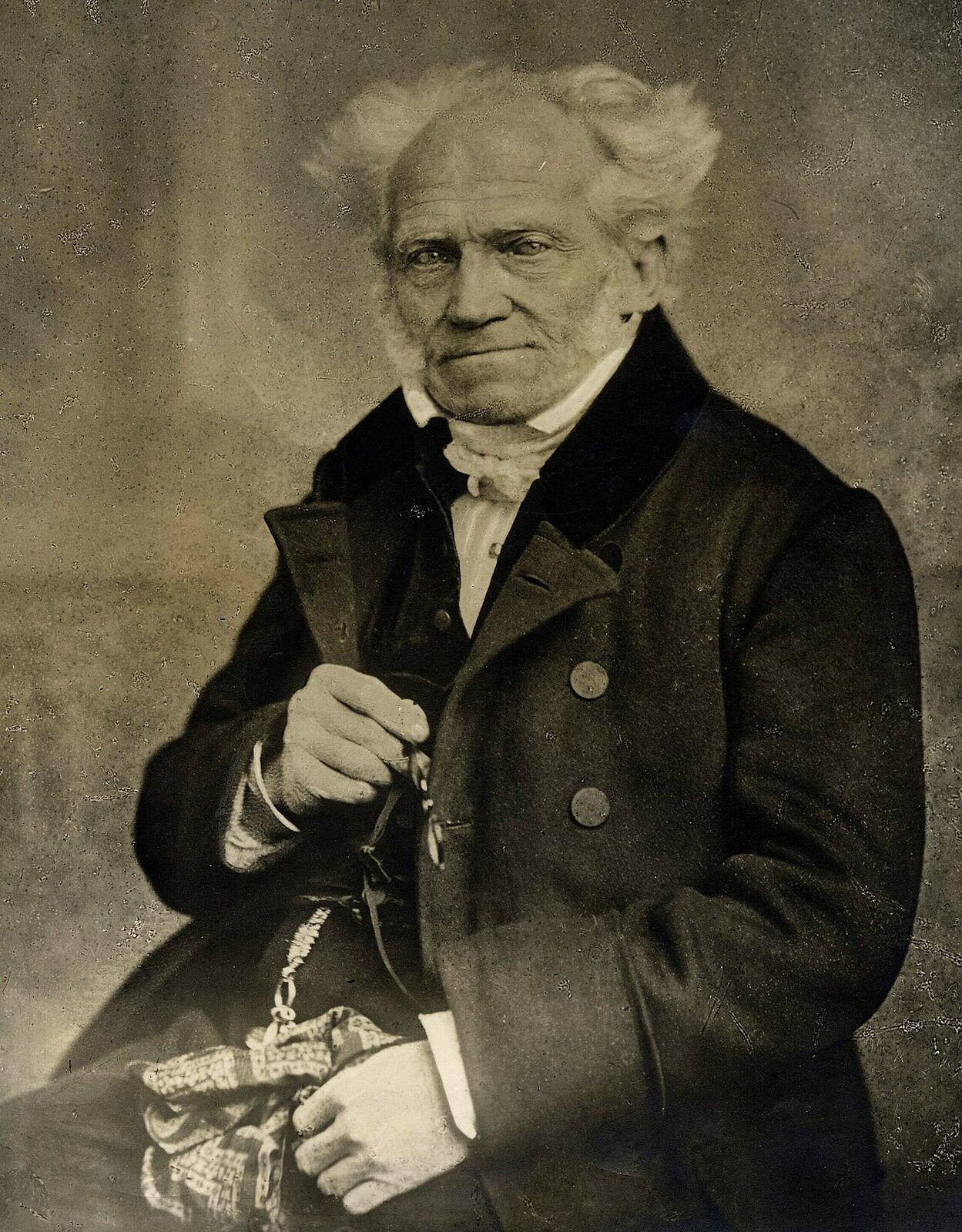
Life
Arthur Schopenhauer in their own century
Born in Danzig to a merchant family, Schopenhauer published The World as Will and Representation at thirty to near silence, failed to draw students against Hegel in Berlin, and lived in Frankfurt on inherited income until fame arrived in his last decade.
He read early Latin translations of the Upanishads and Buddhist sources, and was among the first European philosophers to integrate Indian thought into a systematic argument.
Central ideas
Will
Behind appearances he places not reason but blind striving: the will, which each of us knows directly as our own body in motion.
Suffering
Because willing is lack, satisfaction is brief and boredom follows; suffering is structural rather than accidental.
Aesthetic contemplation
Art, and above all music, suspends willing for a time and allows disinterested perception; compassion and asceticism offer a more lasting release.
Criticism & debate
Critics argue his pessimism is asserted more than demonstrated, and that his own comfortable life and documented misogyny undercut the ascetic ideal he recommends.
Influence
He shaped Nietzsche, Wagner, Tolstoy, Freud, Wittgenstein and Beckett, and opened European philosophy to Indian thought.
How to read them
Begin Arthur Schopenhauer with the tension between will and suffering. Read the major works slowly enough to notice how biography, public crisis and method shape the argument rather than treating the thinker as a list of doctrines.
If Arthur Schopenhauer is right about will, what habit of judgement would have to change first?
In their words
“Man can do what he wills, but he cannot will what he wills.”
“Every man takes the limits of his own field of vision for the limits of the world.”