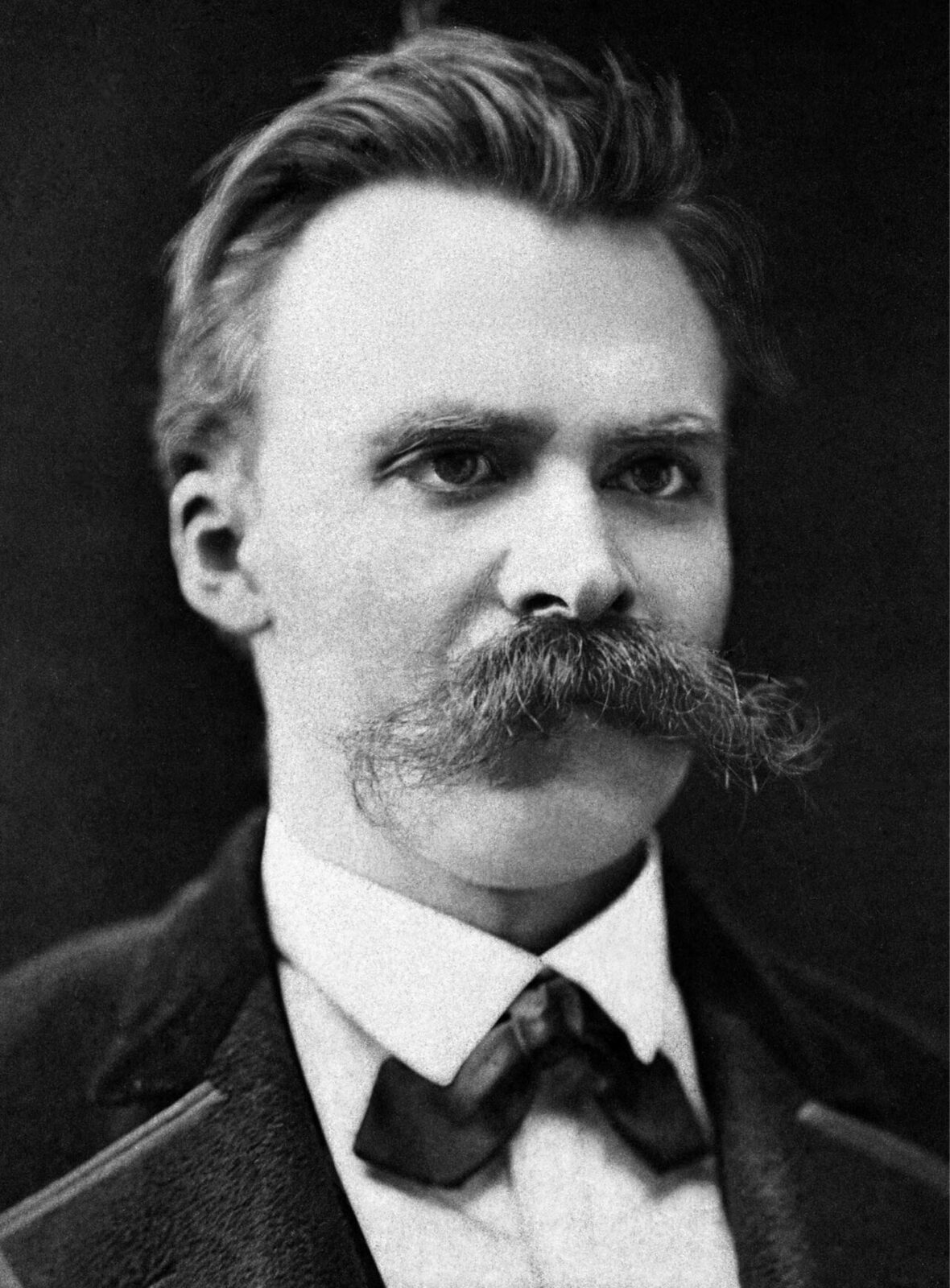
Life
Friedrich Nietzsche in their own century
Appointed professor of classical philology at Basel at twenty-four, Nietzsche resigned in 1879 for reasons of health and wrote his major books while moving between Swiss, Italian and French boarding houses. He collapsed in Turin in 1889 and never recovered.
He wrote into a newly unified Germany of nationalism and antisemitism that he despised; his sister’s later editing of his notes helped fascists misappropriate work that attacked their premises.
Central ideas
Genealogy
Instead of asking whether a value is true, he asks where it came from and whose strength or weakness it served — a historical method applied to morality itself.
Will to power
He reads life as expansive striving rather than self-preservation, and treats knowledge, art and morality as expressions of that drive.
Value creation
If the highest values have devalued themselves, the task is not resignation but the creation of values that can be affirmed, tested by whether one could will one’s life to recur.
Criticism & debate
His aphoristic form invites contradictory readings; critics object that genealogy explains origins without settling validity, and that his contempt for equality and his remarks on women are objectionable on their own terms.
Influence
He shaped existentialism, psychoanalysis, Foucault’s genealogy, literary modernism and most subsequent critique of moral foundations.
How to read them
Begin Friedrich Nietzsche with the tension between genealogy and will to power. Read the major works slowly enough to notice how biography, public crisis and method shape the argument rather than treating the thinker as a list of doctrines.
If Friedrich Nietzsche is right about genealogy, what habit of judgement would have to change first?
In their words
“If we have our own why of life, we shall get along with almost any how.”
“He who fights with monsters should look to it that he himself does not become a monster.”
“God is dead. God remains dead. And we have killed him.”