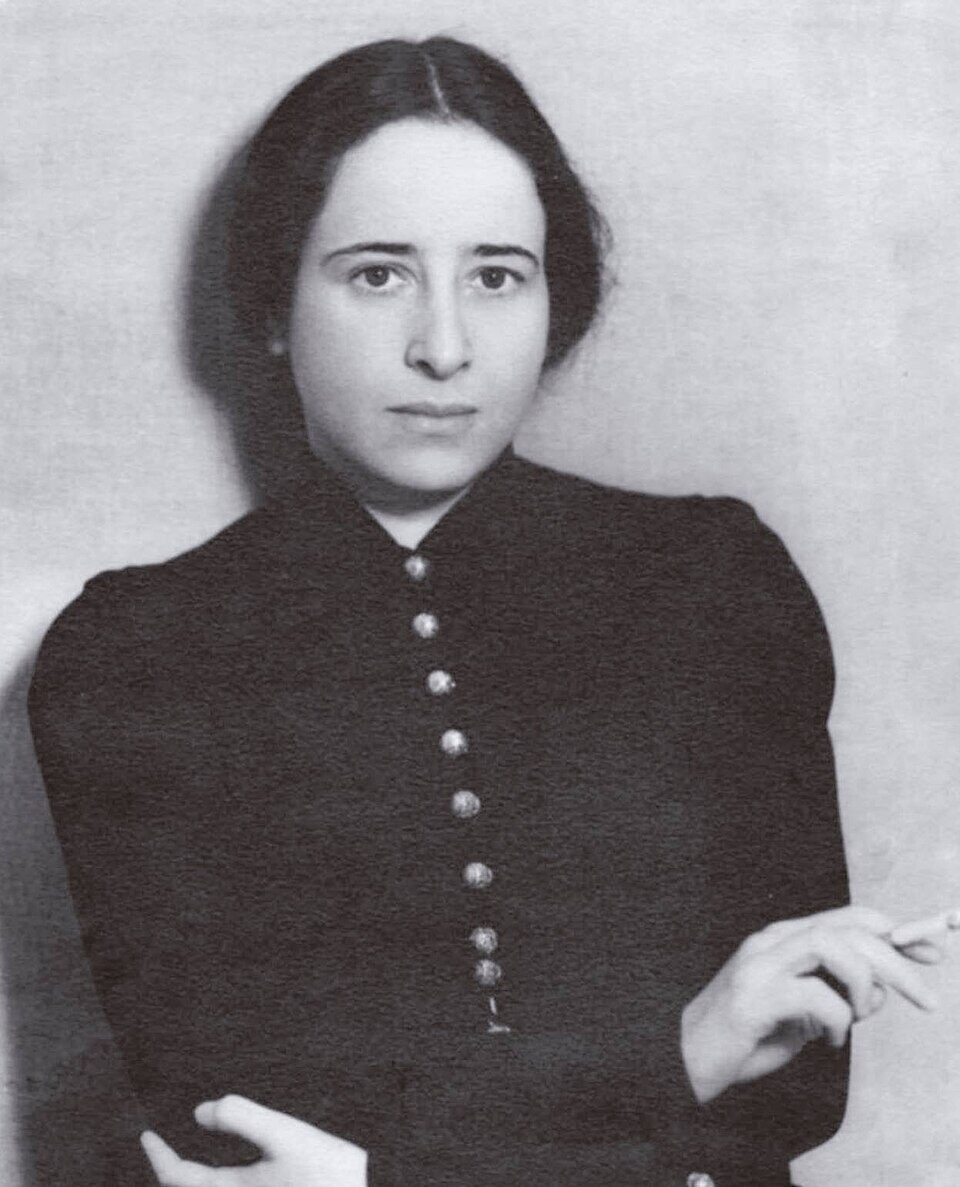
Life
Hannah Arendt in their own century
A student of Heidegger and Jaspers, Arendt fled Germany in 1933 and France in 1941, arrived stateless in New York, and wrote The Origins of Totalitarianism, The Human Condition and her report on the Eichmann trial while teaching in the United States.
Statelessness was her own condition for eighteen years, which is why rightlessness — people who belong to no political community — sits at the centre of her account of rights.
Central ideas
Plurality
Politics exists because people are plural and distinct; a world of identical beings would have no need to speak or act together.
Political action
Action is beginning something new among others, unpredictable and irreversible, and it needs a durable public space in which to appear.
Judgment
Her report on Eichmann argues that great evil can be done by unremarkable people who have stopped thinking about what they are doing.
Criticism & debate
“The banality of evil” was attacked, then and since, as underrating Eichmann’s antisemitism; her essay on Little Rock and her treatment of the social question have been widely criticised, and her postwar defence of Heidegger remains contested.
Influence
She reshaped thinking about totalitarianism, refugees and civic action, and is a standing reference in debates on human rights, statelessness and democratic participation.
How to read them
Begin Hannah Arendt with the tension between plurality and political action. Read the major works slowly enough to notice how biography, public crisis and method shape the argument rather than treating the thinker as a list of doctrines.
If Hannah Arendt is right about plurality, what habit of judgement would have to change first?
In their words
“Action, as distinguished from fabrication, is never possible in isolation.”
“Forgiveness is the only reaction which acts in an unexpected way and so retains, though being a reaction, something of the original character of action.”
“Men, not Man, live on the earth and inhabit the world.”