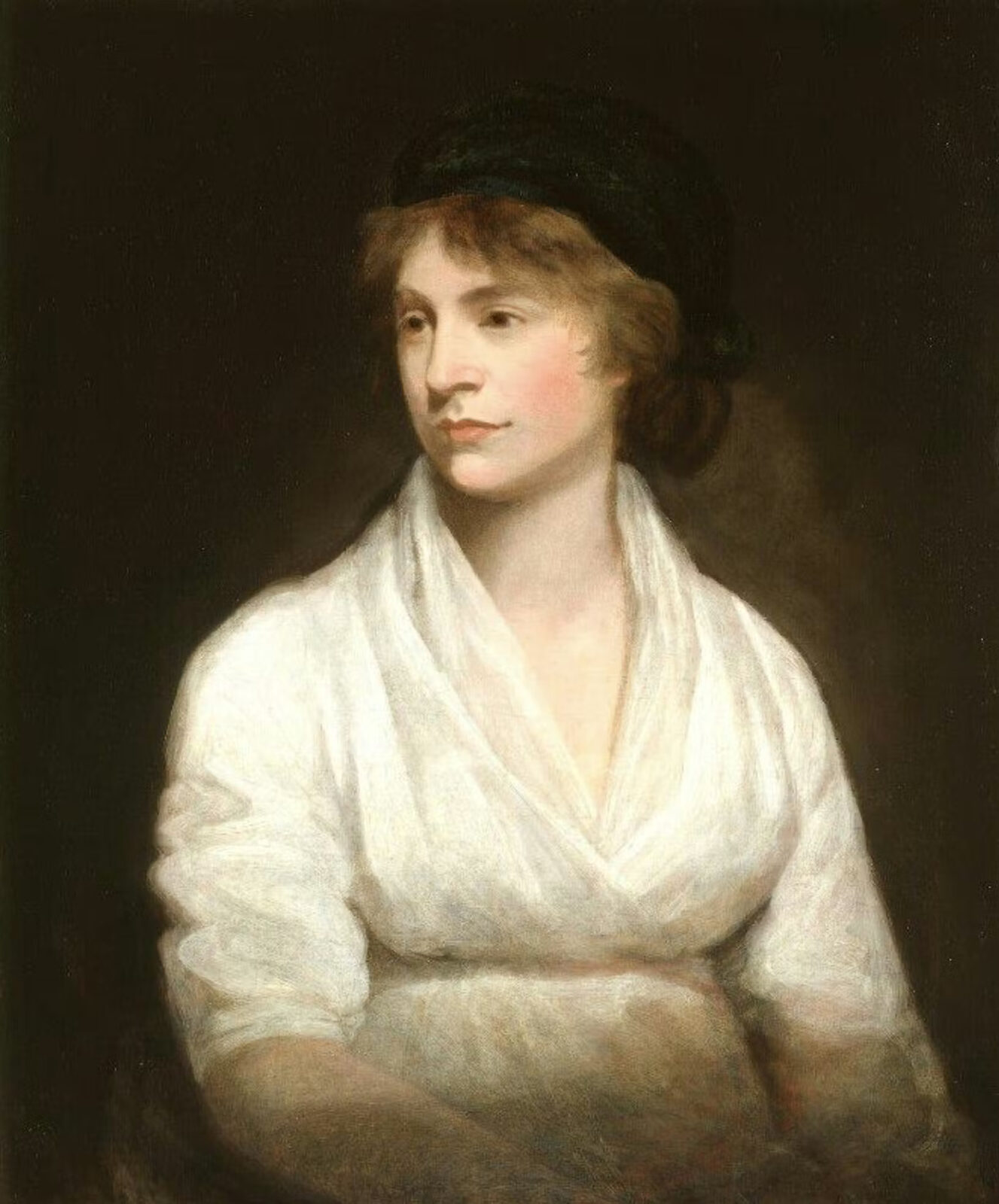
Life
Mary Wollstonecraft in their own century
Wollstonecraft supported herself as a companion, teacher, translator and journalist before answering Burke’s attack on the French Revolution and then publishing A Vindication of the Rights of Woman in 1792. She travelled to revolutionary France, wrote fiction and travel letters, and died shortly after giving birth to Mary Shelley.
Her work belongs to the rights debates opened by the American and French revolutions. She asks why universal claims about reason and liberty stopped at the household door.
Central ideas
Equal education
Women are not naturally trivial; they are trained to be pleasing rather than strong, then blamed for the result of that training.
Rational independence
Virtue requires independence of judgement and cannot develop where marriage, money and custom keep half the species in cultivated dependence.
Critique of sensibility
She attacks sentimental femininity because it makes feeling a substitute for citizenship, discipline and intellectual growth.
Criticism & debate
Later feminists note the class limits of her model of education and virtue, and some of her language still assumes the norms of bourgeois respectability she elsewhere criticises.
Influence
She became a foundational figure for feminist philosophy, education reform and modern arguments that equal citizenship requires equal formation of the mind.
How to read them
Begin Mary Wollstonecraft with the tension between equal education and rational independence. Read the major works slowly enough to notice how biography, public crisis and method shape the argument rather than treating the thinker as a list of doctrines.
If Mary Wollstonecraft is right about equal education, what habit of judgement would have to change first?
In their words
“I do not wish them to have power over men; but over themselves.”