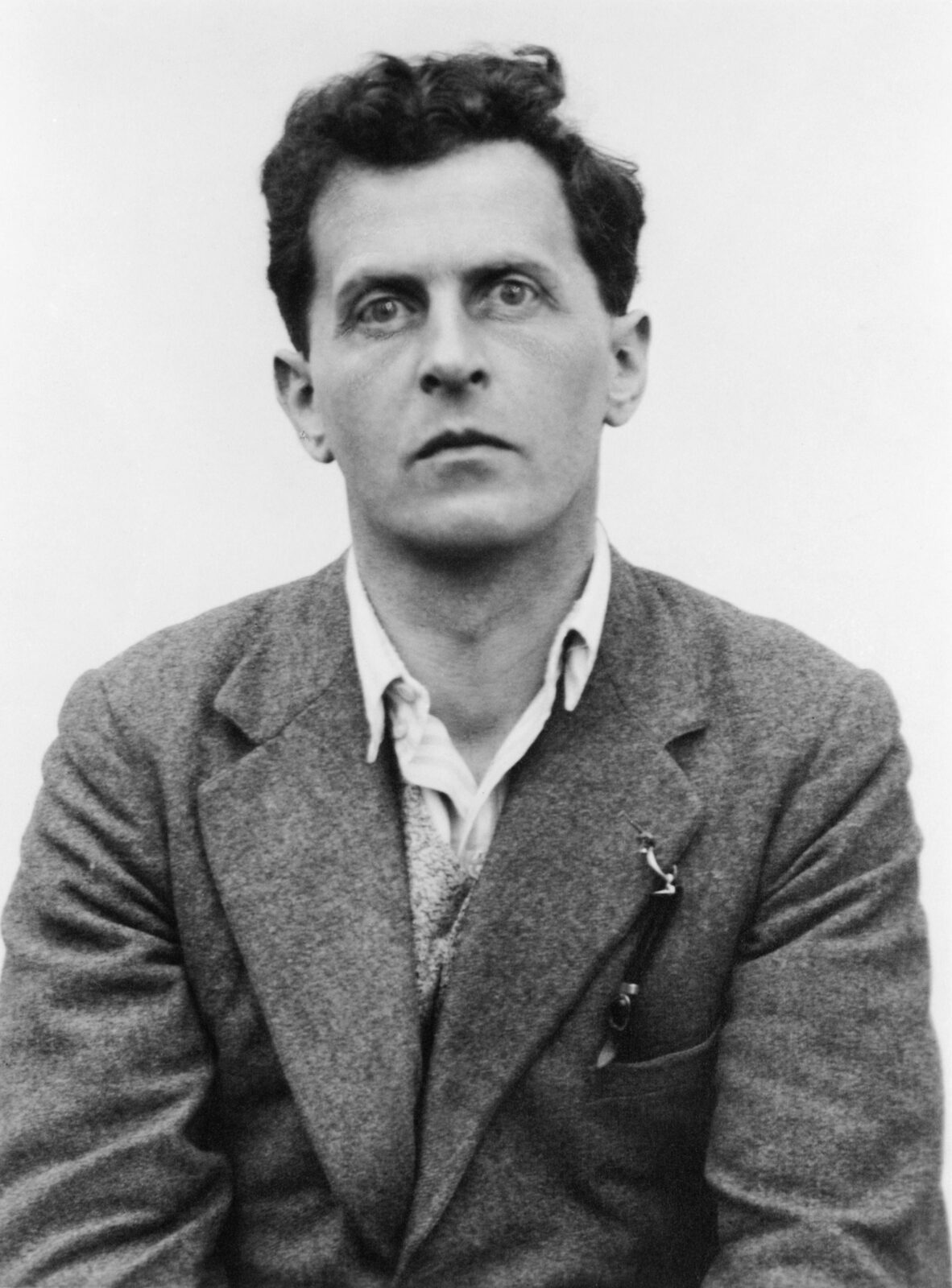
Life
Ludwig Wittgenstein in their own century
Wittgenstein was born in Vienna into one of the wealthiest families in the empire, trained as an aeronautical engineer, and came to Cambridge to work with Russell on the foundations of logic. He wrote the Tractatus while serving in the Austro-Hungarian army and finished it in an Italian prisoner-of-war camp. He then gave away his inheritance, taught in village schools in Lower Austria, designed a house for his sister, and returned to Cambridge only in 1929. He held the chair there from 1939 and resigned it in 1947.
Vienna before the war was arguing about the limits of language across music, architecture, journalism and law, and Cambridge was in the middle of an attempt to reduce mathematics to logic. He arrived at the intersection of those two conversations and never left it, though what he thought language was changed completely.
Central ideas
The limits of what can be said
The Tractatus holds that a proposition means by sharing a form with what it depicts, and that what cannot be depicted cannot be said. Ethics, aesthetics and the sense of the world therefore fall outside language, not because they do not matter but because, in his view, they matter too much for statements. The book ends by asking the reader to throw away the ladder they climbed.
Meaning as use
The later work abandons the idea that a word means by standing for something. Ask instead how the word is used, in what he calls a language-game, and the question of what all its uses have in common may simply have no answer: they are related as members of a family are, by overlapping resemblances rather than a shared essence.
The private language argument
Could there be a language whose words refer to sensations only the speaker can know? He argues not: without any standard independent of the speaker's impression, there is no difference between following a rule and only seeming to, so nothing is being fixed at all. The argument cuts at a picture of the mind that runs from Descartes to the present.
Criticism & debate
The Tractatus ends by declaring its own propositions nonsensical, and readers have argued ever since about whether that is a deep move or a collapse. The later work has been charged with being anti-theoretical to the point of leaving nothing to say, and Kripke's influential reading of rule-following is disputed by scholars who think it is his own problem rather than Wittgenstein's.
Influence
The Tractatus shaped the Vienna Circle, which he thought had misread it. The Investigations shaped ordinary-language philosophy at Oxford, and through it the philosophy of mind, of psychology and of religion. Few philosophers have founded two movements by accident.
How to read them
Begin Ludwig Wittgenstein with the tension between the limits of what can be said and meaning as use. Read the major works slowly enough to notice how biography, public crisis and method shape the argument rather than treating the thinker as a list of doctrines.
If Ludwig Wittgenstein is right about the limits of what can be said, what habit of judgement would have to change first?
In their words
“Whereof one cannot speak, thereof one must be silent.”
“The limits of my language mean the limits of my world.”
“The meaning of a word is its use in the language.”