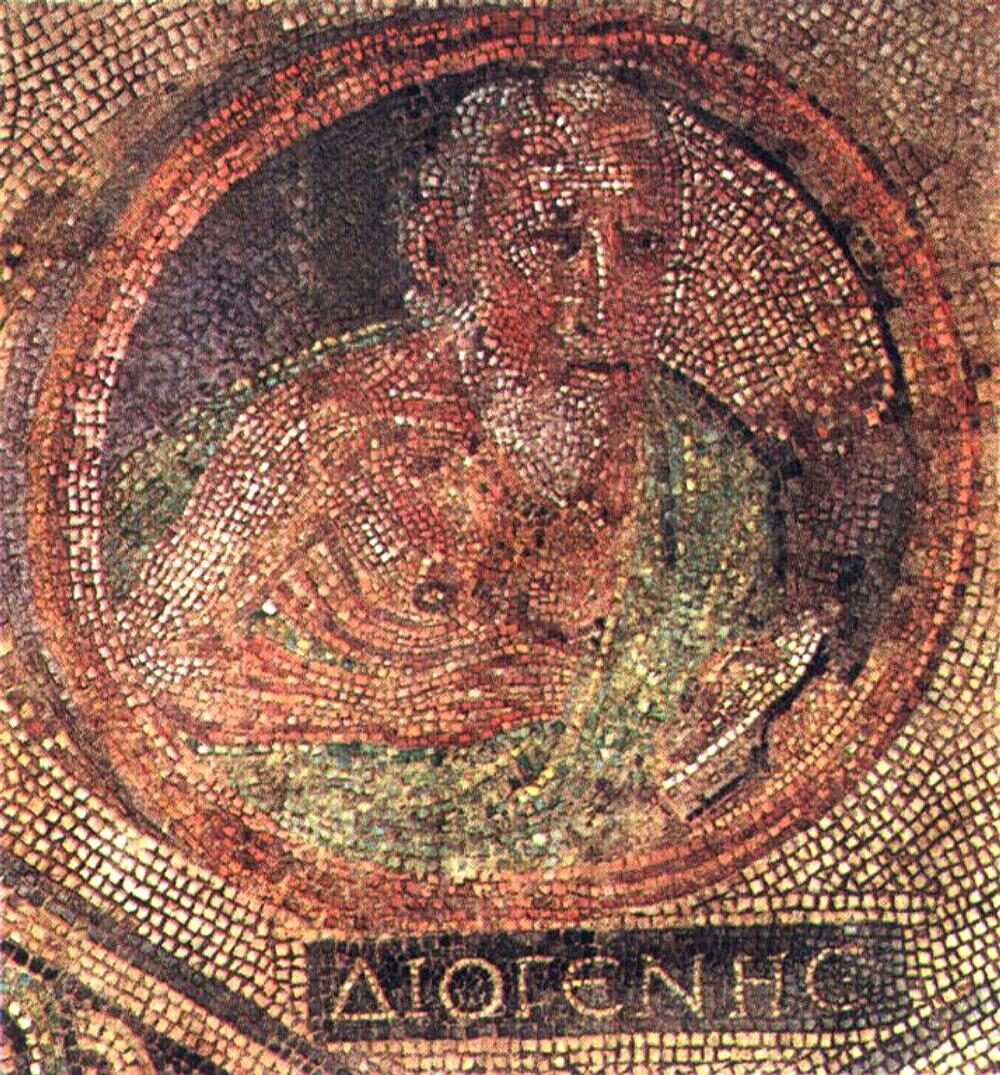
Life
Diogenes of Sinope in their own century
Ancient biographies say Diogenes came from Sinope, was exiled after a currency scandal, and lived in Athens and Corinth with almost no possessions. The stories are stylised, but they preserve a consistent public character: a philosopher who answered civic vanity by reducing need and speaking without deference.
His career belongs to the same fourth-century world as Plato and Aristotle, but he worked against their institutional seriousness. Instead of founding an academy, he turned streets, marketplaces, games and dinner tables into stages where social prestige could be exposed as theatre.
Central ideas
Askesis
Cynic training was bodily and public: poverty, exposure, hunger and ridicule were exercises meant to loosen dependence on comfort and approval.
Parrhesia
Frank speech was not rudeness for its own sake; it was a refusal to protect illusion when the truth would make a listener smaller but freer.
Cosmopolitanism
When asked where he came from, he reportedly answered that he was a citizen of the world, a shocking claim in a culture where identity was tied to city, lineage and law.
Criticism & debate
Because almost everything is anecdotal and often comic, it is difficult to separate doctrine from legend. Critics also ask whether permanent provocation can sustain friendship, institutions or care for the vulnerable.
Influence
Stoics inherited his ideal of self-command and cosmopolitanism, while later ascetics, satirists and social critics repeatedly revived the Cynic gesture of living against convention.
How to read them
Begin Diogenes of Sinope with the tension between askesis and parrhesia. Read the major works slowly enough to notice how biography, public crisis and method shape the argument rather than treating the thinker as a list of doctrines.
If Diogenes of Sinope is right about askesis, what habit of judgement would have to change first?
In their words
“I am a citizen of the world.”
“Stand a little out of my sun.”