Cynicism
Freedom through radical simplicity and convention’s critique.
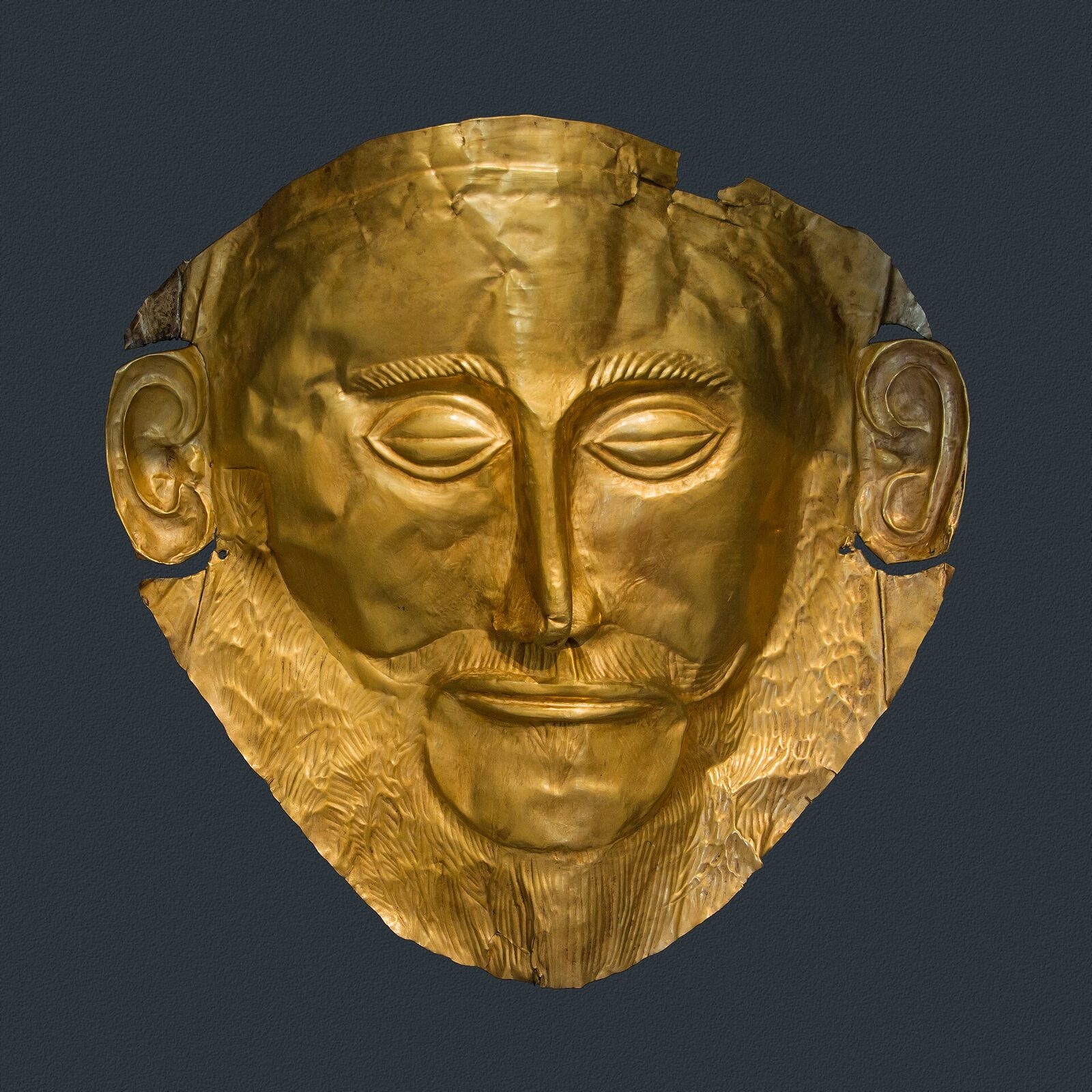
Funeral mask known as the “Mask of Agamemnon”, gold, 16th century BCE · National Archaeological Museum, Athens (photo Jebulon, CC0)
Origin
Associated with Diogenes of Sinope in 4th-century BCE Athens and Corinth.
Central claims
- Convention often disguises rather than serves human good.
- Self-sufficiency requires reducing dependence on possessions.
- Frank speech is a philosophical duty.
Criticism
The Cynics left little written work, and critics question whether provocation alone can build an ethics or a shared political life.
Development
Cynicism spread through remembered performances as much as texts: public poverty, comic insult, shocking gestures and disciplined need. Its classroom was the street, where convention could be tested in front of the people who obeyed it.
Legacy
The tradition survives in every philosophical refusal to confuse success with freedom, and in every critique that asks whether respectable habits are merely decorated dependence.
In their words
“I am a citizen of the world.”
“Stand a little out of my sun.”