Life
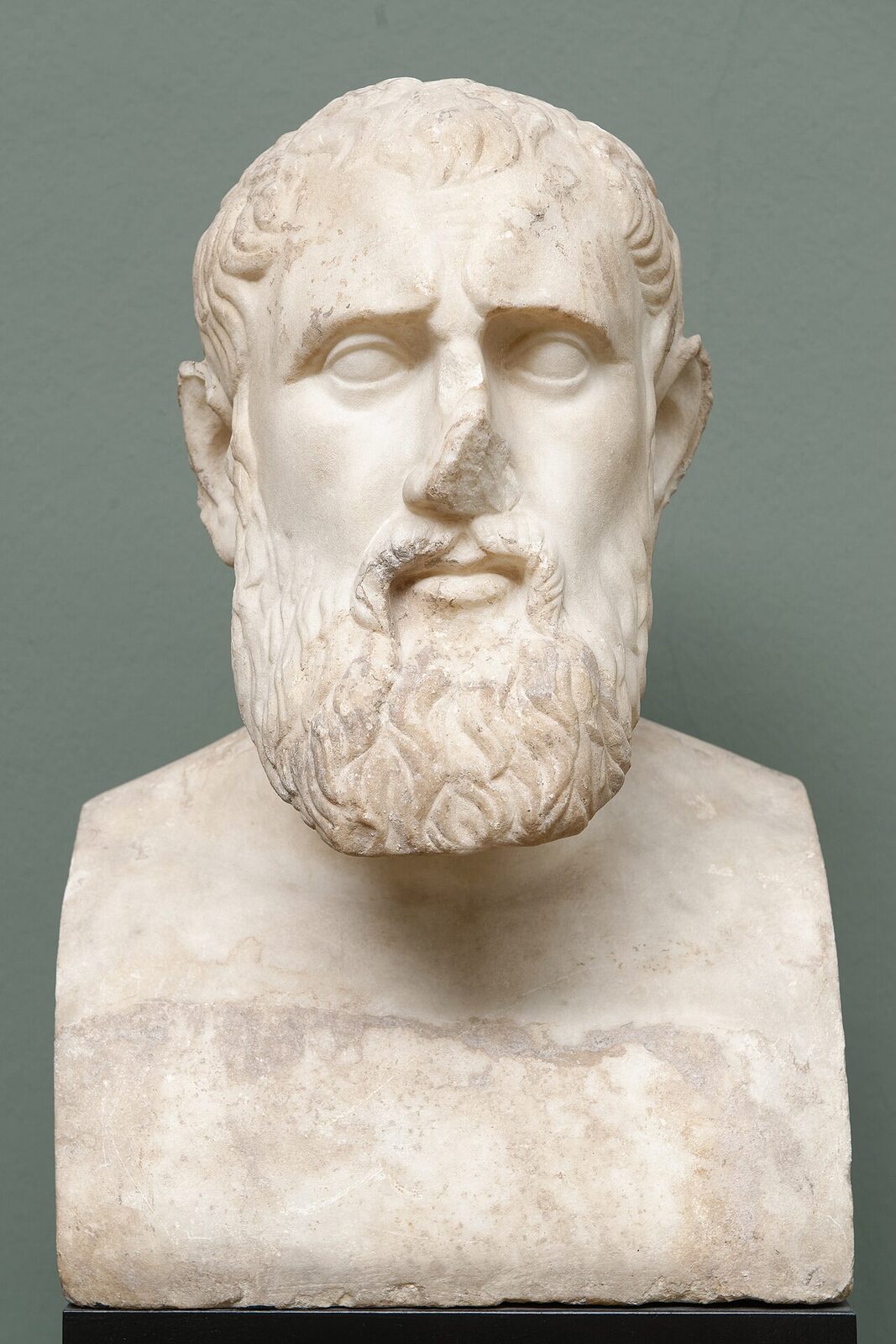
Zeno of Citium in their own century
A merchant from Citium on Cyprus, Zeno reportedly turned to philosophy after a shipwreck left him in Athens. He studied with the Cynic Crates and others before teaching in the Stoa Poikile, the public colonnade that gave the school its name.
Teaching in a colonnade rather than a walled garden mattered: Stoicism began as a public, cosmopolitan philosophy addressed to a Greek world of mixed cities and migrants.
Central ideas
Life according to nature
To live according to nature is to act in accordance with reason, the same rational order that structures the cosmos.
Virtue
Virtue alone is good and vice alone bad; health, wealth and reputation are “preferred indifferents” that never make a life good on their own.
Cosmopolitanism
His lost Republic imagined a community without temples, courts or currency, held together by the shared reason of its members rather than by walls.
Criticism & debate
Only fragments and later reports survive, so his system is reconstructed from critics as much as followers; the claim that externals are indifferent struck opponents then and now as unlivable.
Influence
Chrysippus systematised his teaching, and through Seneca, Epictetus and Marcus Aurelius it became the most widely practised philosophy of the Roman world.
How to read them
Begin Zeno of Citium with the tension between life according to nature and virtue. Read the major works slowly enough to notice how biography, public crisis and method shape the argument rather than treating the thinker as a list of doctrines.
If Zeno of Citium is right about life according to nature, what habit of judgement would have to change first?