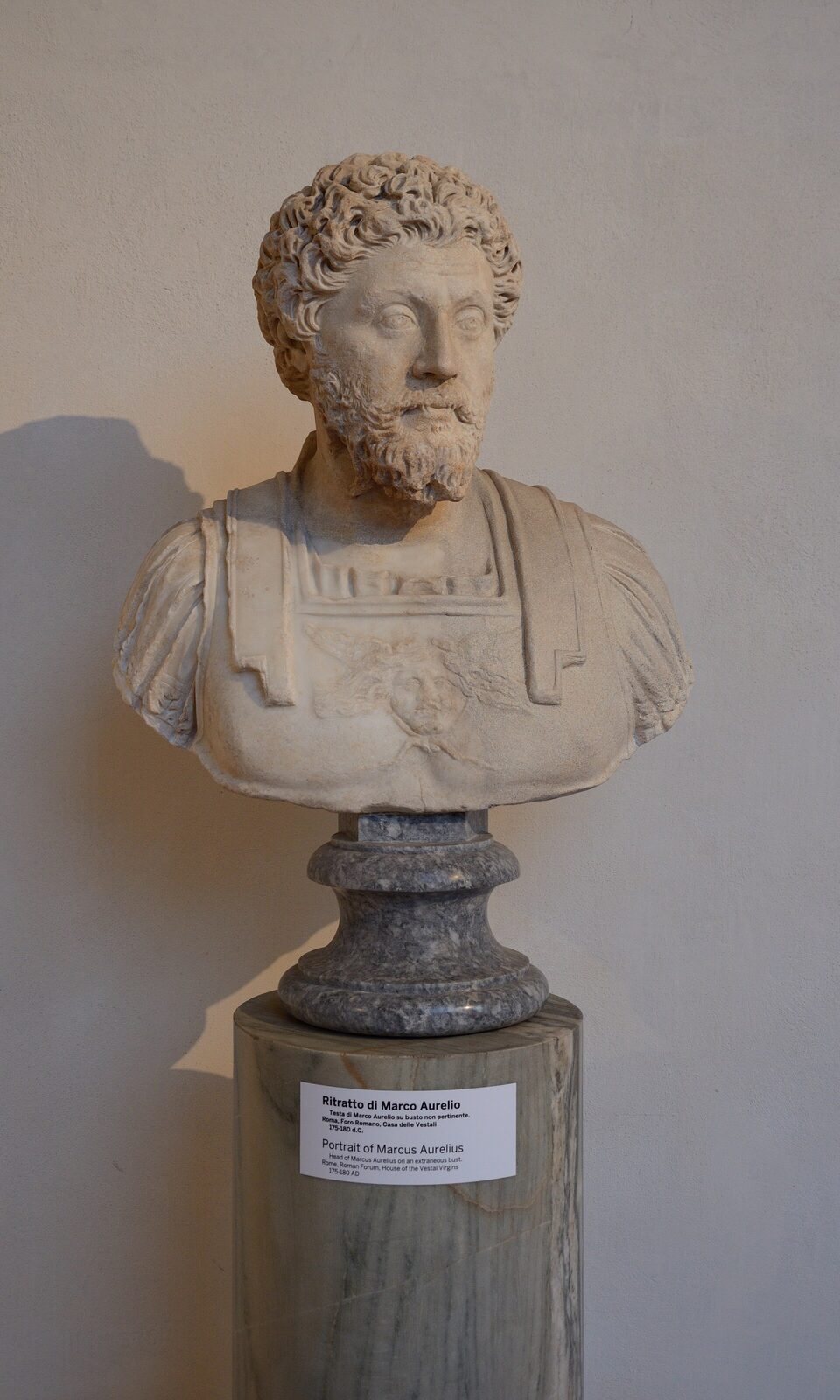
Life
Marcus Aurelius in their own century
Adopted into the imperial family and educated by the best rhetoricians of the age, Marcus ruled from 161 CE through plague, flooding and near-continuous war on the Danube frontier, where much of the Meditations was written.
The notebooks were private exercises, not a treatise, composed by a man with unchecked power reminding himself that he was mortal, replaceable and obliged to the common good.
Central ideas
Impermanence
He returns constantly to how briefly anything lasts — fame, empires, himself — as a way of resizing ambition and grievance.
Duty
Rational beings exist for one another, so social duty is not sacrifice but the natural work of a citizen of the world.
Rational response
Events are indifferent until judged; what disturbs is the added opinion, which can be withdrawn.
Criticism & debate
Readers note the gap between the humane notebooks and an administration that persecuted Christians and waged relentless war, and some find the repetition symptomatic of consolation rather than argument.
Influence
Never intended for publication, the Meditations became one of the most widely read philosophical books in the world and the main entry point to Stoicism today.
How to read them
Begin Marcus Aurelius with the tension between impermanence and duty. Read the major works slowly enough to notice how biography, public crisis and method shape the argument rather than treating the thinker as a list of doctrines.
If Marcus Aurelius is right about impermanence, what habit of judgement would have to change first?
In their words
“The mind converts and changes every hindrance to its activity into an aid.”
“Confine yourself to the present.”
“Take away the complaint “I have been harmed”, and the harm is taken away.”