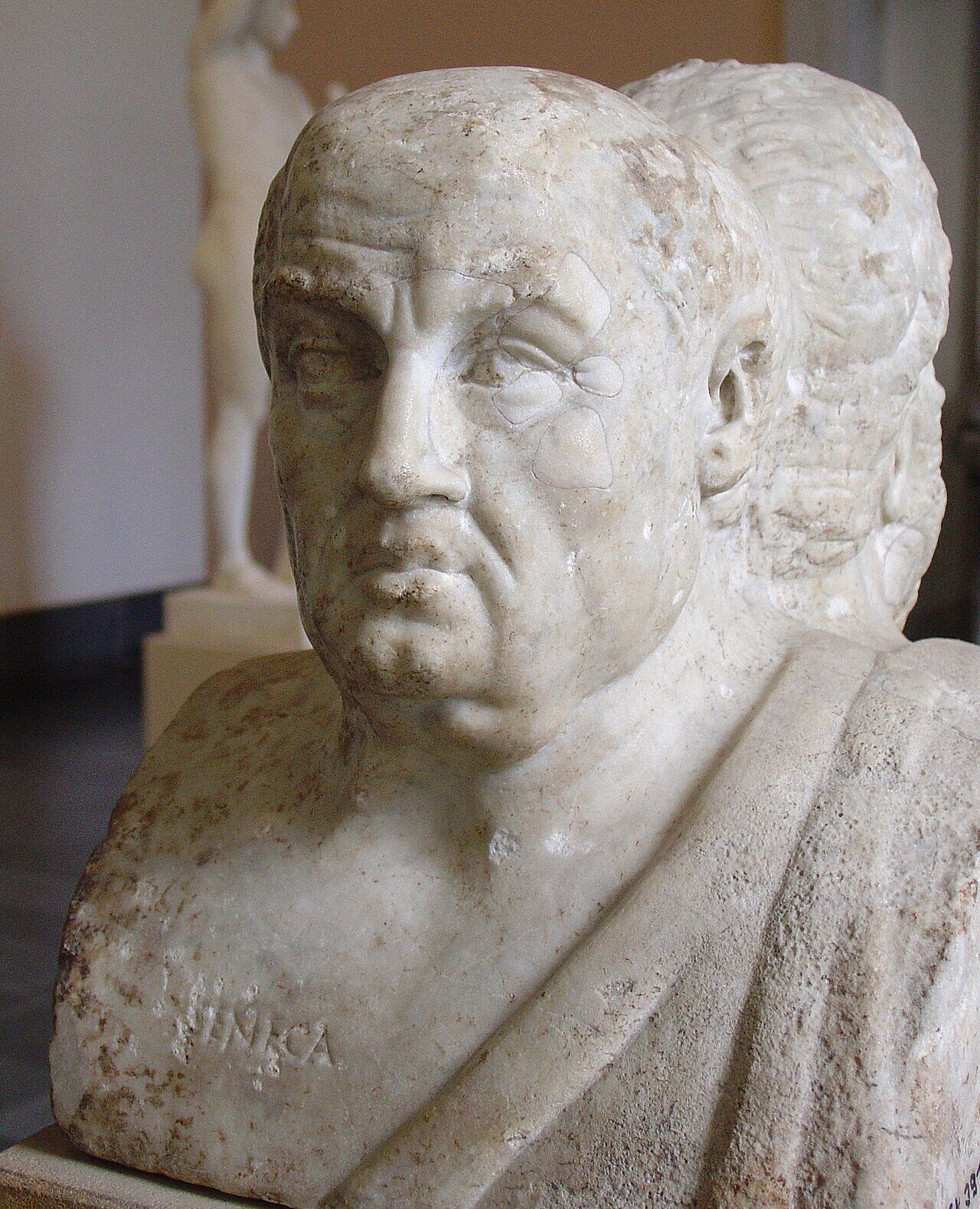
Life
Seneca in their own century
Born in Córdoba, Seneca rose as an orator and senator, was exiled to Corsica by Claudius, recalled to tutor the young Nero, and became for a time the most powerful adviser in Rome. Ordered to die in 65 CE after the Pisonian conspiracy, he took his own life.
He wrote philosophy while serving an increasingly violent court, and the tension between immense wealth, political complicity and Stoic counsel runs through the letters themselves.
Central ideas
Use of time
Time is the one possession genuinely ours, and most of it is lost not to others but to distraction and postponement.
Moral practice
Philosophy is training, not erudition: he prescribes daily review, rehearsal of hardship, and plain speech in letters to a friend.
Resilience
Adversity is examined as material for character rather than as an injustice to be protested, a stance he tested in exile and at his death.
Criticism & debate
Ancient and modern readers alike charge him with hypocrisy: a vast fortune, lucrative loans, and years of service to Nero sit uneasily beside his praise of poverty and integrity.
Influence
His essays shaped Renaissance neo-Stoicism, Montaigne’s essay form, and the modern popular revival of Stoic practice.
How to read them
Begin Seneca with the tension between use of time and moral practice. Read the major works slowly enough to notice how biography, public crisis and method shape the argument rather than treating the thinker as a list of doctrines.
If Seneca is right about use of time, what habit of judgement would have to change first?
In their words
“We suffer more often in imagination than in reality.”
“Life is long if you know how to use it.”
“It is not that we have a short time to live, but that we waste much of it.”