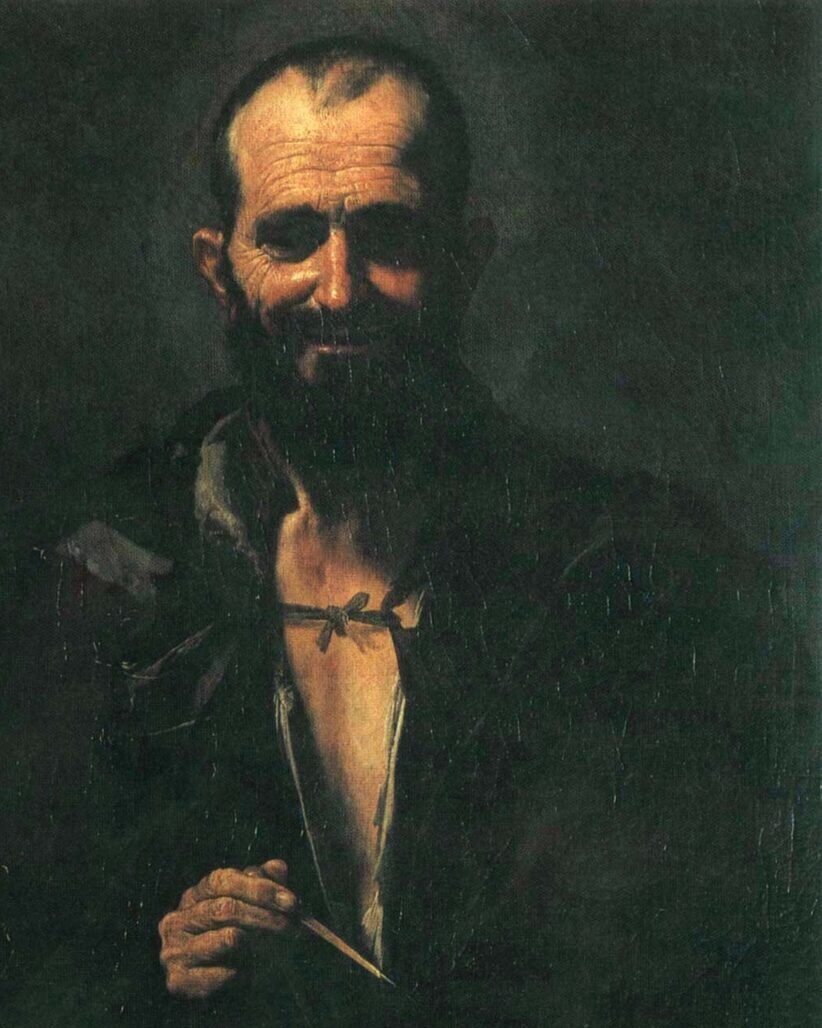
Life
Democritus in their own century
Democritus came from Abdera on the Thracian coast, travelled widely on an inheritance he spent on study, and wrote on physics, mathematics, ethics, music and much else. Only fragments survive, most of them ethical sayings.
Atomism answers Parmenides on his own terms: it grants that what is cannot come from what is not, and saves change by making the world a rearrangement of things that never come to be or perish.
Central ideas
Atoms and void
Nothing exists but atoms, indivisible and unchanging, moving in empty space. Everything else is a matter of how they are arranged.
Convention and reality
Sweet and bitter, hot and cold, colour: by convention, he says, while in reality there are atoms and void. Perceived qualities belong to the perceiver as much as to the thing.
Cheerfulness
The end of life is euthymia, a settled cheerfulness reached by moderation and by not measuring oneself against those who have more.
Criticism & debate
Ancient reports rarely separate him from Leucippus, and Aristotle's summaries shape most of what survives. Some scholars have doubted whether the ethical fragments come from the same author as the physics.
Influence
Epicurus built his physics on atomism, Lucretius put it into Latin verse, and the ancient argument about atoms and void re-entered European science in the seventeenth century.
How to read them
Begin Democritus with the tension between atoms and void and convention and reality. Read the major works slowly enough to notice how biography, public crisis and method shape the argument rather than treating the thinker as a list of doctrines.
If Democritus is right about atoms and void, what habit of judgement would have to change first?