Skepticism
Suspended judgement, inquiry, and relief from dogmatic certainty.
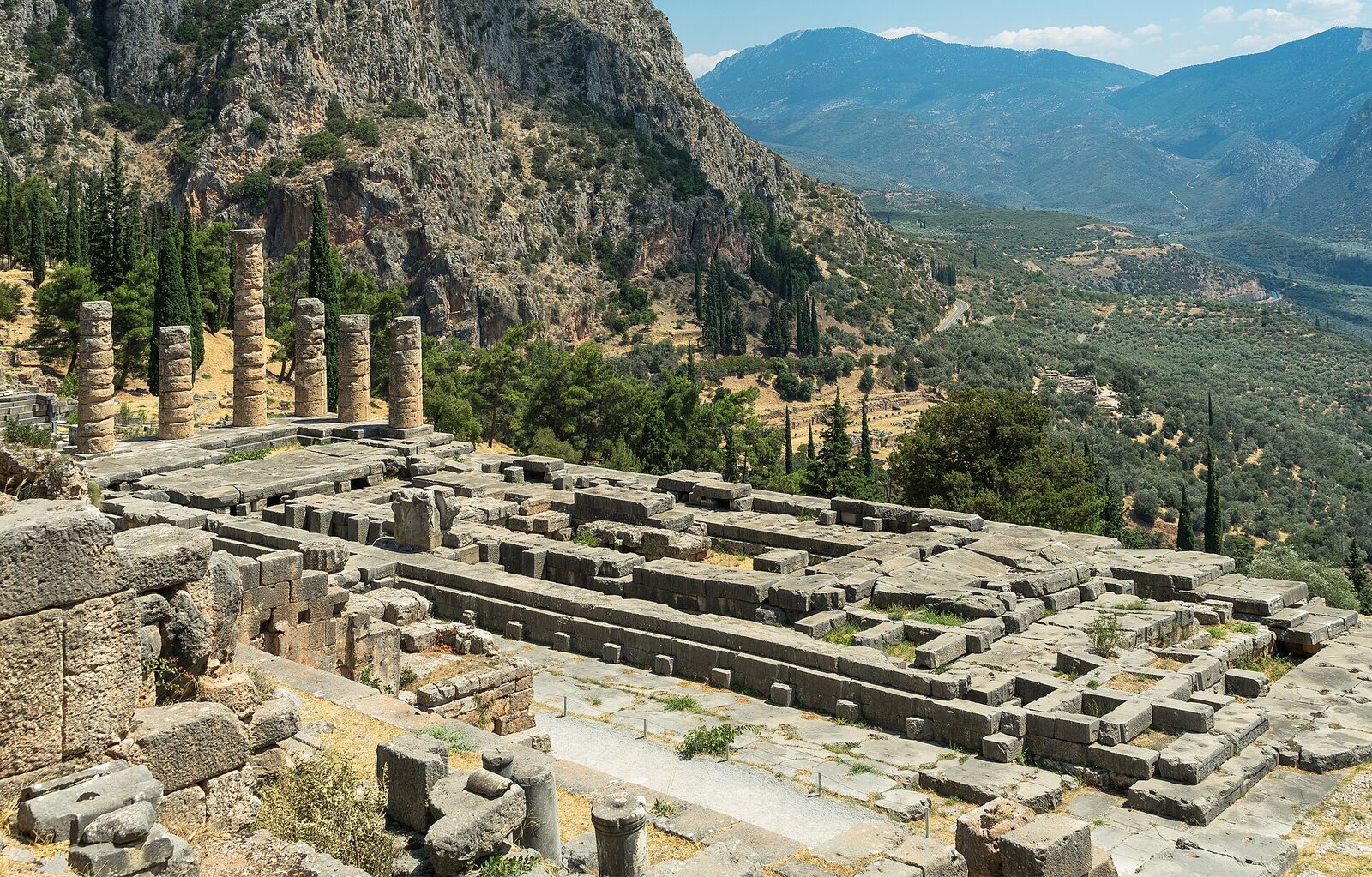
Sanctuary of Apollo, Delphi (photo Jebulon, CC0)
Origin
Ancient scepticism developed through Pyrrho, the Academy, and Sextus Empiricus; modern scepticism became a method in Descartes and Hume.
Central claims
- Certainty is rarer than ordinary confidence admits.
- Suspending judgement can be a discipline rather than a failure.
- Inquiry improves when appearances are separated from dogmatic conclusions.
Criticism
A scepticism that doubts everything seems unable to act or speak; its strongest defenders answer that ordinary appearances and provisional habits remain without claiming final certainty.
Development
Scepticism alternates between therapy and method. Ancient Pyrrhonists sought tranquility by opposing appearances to dogmas; modern sceptics used doubt to locate the limits and conditions of knowledge.
Legacy
Its legacy is not cynicism but intellectual hygiene: it slows the rush from appearance to certainty and makes room for evidence, probability and humility.
In their words
“The unexamined life is not worth living.”
“What I do not know, I do not think I know either.”
“I think, therefore I am.”