Scholasticism
Medieval disputation joining logic, theology, Aristotle, and law.
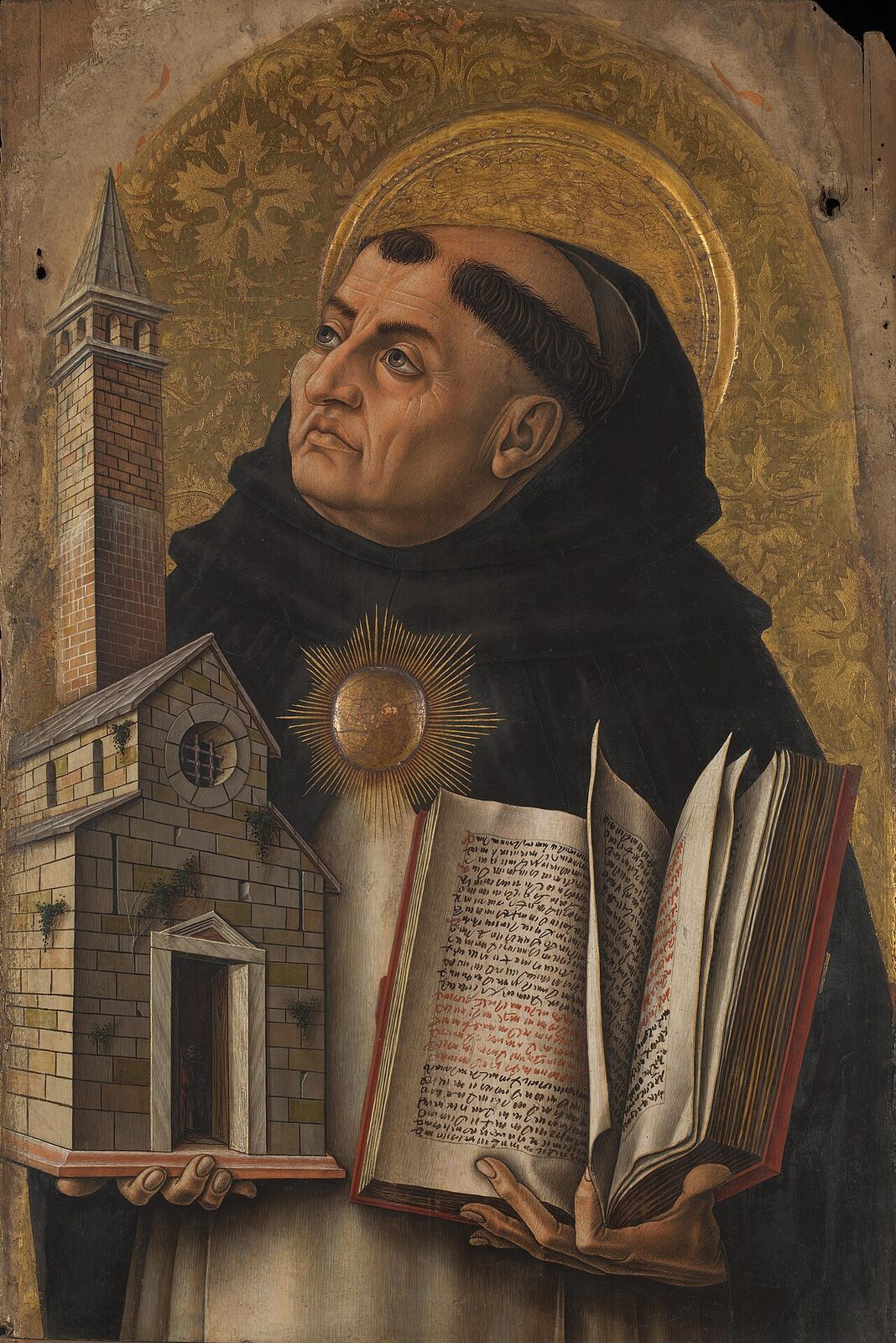
Saint Thomas Aquinas, Carlo Crivelli, 1476 · National Gallery, London
Origin
Medieval scholasticism formed in cathedral schools and universities, especially Paris, as Aristotle returned through Arabic, Jewish and Greek transmission.
Central claims
- Questions become clearer when objections are stated before replies.
- Reason can investigate nature while theology addresses revelation.
- Law, virtue and being can be ordered through careful distinctions.
Criticism
Its technical language can become scholasticism in the pejorative sense: distinctions so fine that they appear detached from experience or historical change.
Development
Scholasticism was a practice of ordered disputation before it was a body of conclusions. Its questions, objections and replies trained readers to distinguish senses, define terms and test authorities against one another.
Legacy
The tradition still matters whenever law, theology and ethics require exact distinctions, and whenever reasoned disagreement is treated as a disciplined craft rather than a personal attack.
In their words
“Man is by nature a political animal.”
“Happiness is an activity of the soul in accordance with virtue.”
“We become just by doing just acts, temperate by doing temperate acts.”