Platonism
Reason’s ascent toward stable truth, beauty, and the good.
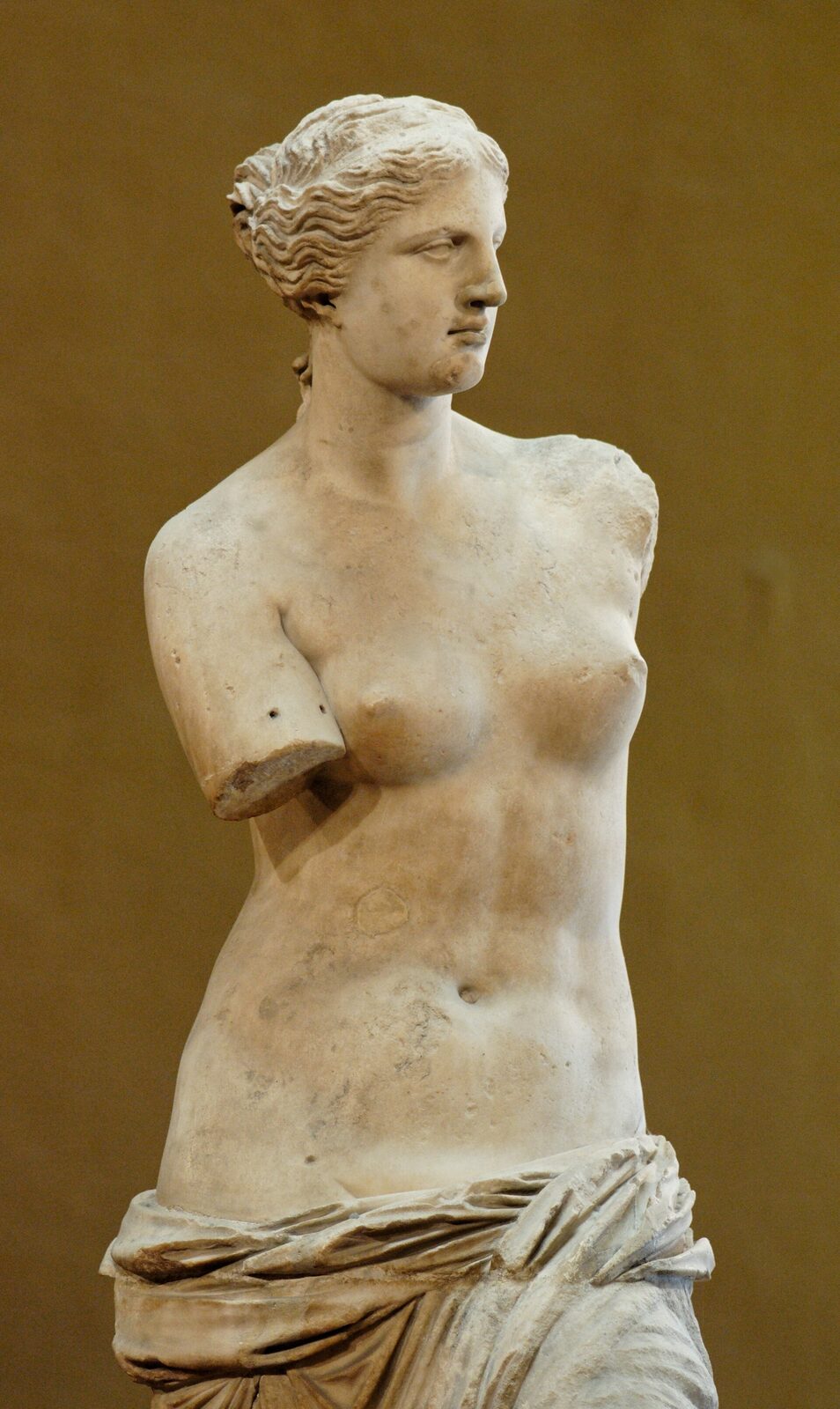
Aphrodite of Melos (“Venus de Milo”), Parian marble, c. 130–100 BCE · Louvre Museum
Origin
Founded by Plato with the Academy in Athens, c. 387 BCE.
Central claims
- Stable objects of knowledge — the Forms — underlie changing appearances.
- The soul’s ascent toward truth reorders desire.
- Justice concerns the ordering of soul and city alike.
Criticism
Aristotle already objected that separated Forms explain little, and modern critics question the political proposals of the Republic.
Development
Platonism moved from dramatic dialogues to Academy debates, later metaphysics and Christian, Jewish and Islamic adaptations. Across these changes it keeps returning to ascent: from opinion to knowledge, from appetite to order, from beautiful things to beauty itself.
Legacy
Its influence is visible whenever philosophy treats truth, goodness and beauty as standards that judge ordinary life rather than as preferences produced by it.
In their words
“The unexamined life is not worth living.”
“What I do not know, I do not think I know either.”
“Love is the desire for the perpetual possession of the good.”