German Idealism
Freedom, history, and the claim that thought develops through its own contradictions.
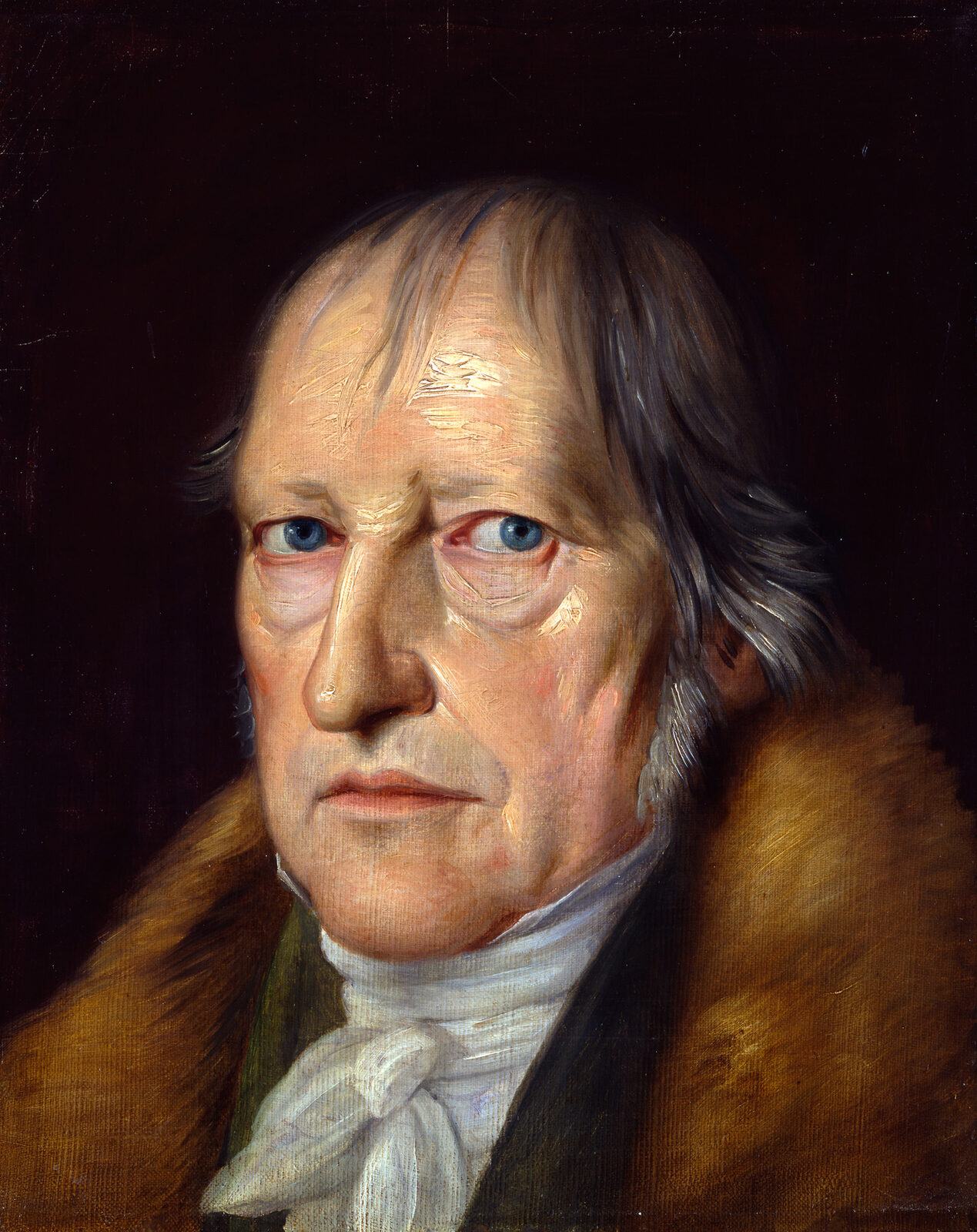
Hegel by Jakob Schlesinger, 1831 · Alte Nationalgalerie, Berlin · public domain
Origin
German universities between Kant's first Critique in 1781 and Hegel's death in 1831.
Central claims
- The mind is not a spectator of the world but a condition of there being one.
- Freedom is the point of history, not an exception to it.
- A contradiction is a stage in an argument rather than the end of one.
Criticism
The movement's ambition is also the standing objection to it: a philosophy that claims to derive the structure of reality from the structure of thought is very hard to check. Schopenhauer, Kierkegaard, Marx and the early analytic philosophers all broke with it, for incompatible reasons.
Development
Kant secured knowledge by limiting it, leaving the thing in itself unknowable. Fichte, Schelling and Hegel each treated that remainder as a problem rather than a result, and tried to close the gap by making the subject's own activity the whole story.
Legacy
Marxism, existentialism, phenomenology, critical theory and most modern accounts of recognition and identity trace back through this argument, usually by way of Hegel and usually by disagreeing with him.
In their words
“The owl of Minerva begins its flight only with the onset of dusk.”
“What is rational is actual; and what is actual is rational.”
“Self-consciousness exists in and for itself when, and by the fact that, it so exists for another.”