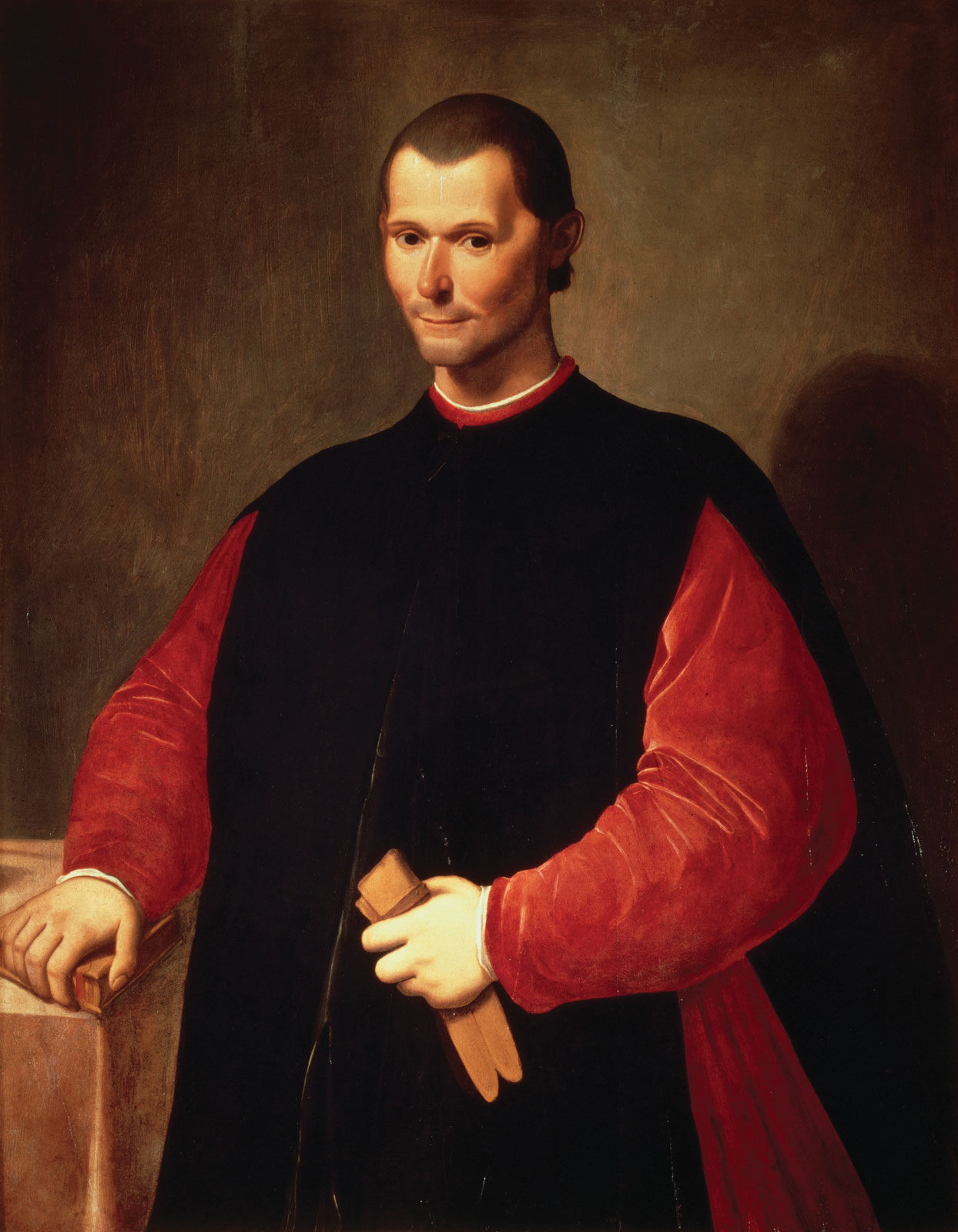
Life
Niccolò Machiavelli in their own century
Machiavelli served the Florentine republic as a diplomat and military official until the Medici returned to power in 1512. Dismissed, imprisoned and tortured, he retired to his farm and wrote The Prince, the Discourses and comedies while trying to regain public employment.
Italian city-states were caught between papal intrigue, French and Spanish armies, mercenary captains and fragile republican institutions. His political realism is inseparable from this landscape of sudden reversals.
Central ideas
Virtù
Virtù is not virtue in the Christian sense but political capacity: boldness, timing, force, adaptability and the ability to found or preserve order.
Fortuna
Fortuna names contingency — flood, luck, accident — that cannot be abolished but can be prepared for by institutions and decisive action.
Republican liberty
The Discourses praise mixed constitutions, civic militia and conflict channelled by law, showing that Machiavelli is more than the adviser of princes.
Criticism & debate
The charge of cynicism is old: he appears to license cruelty and deceit when politically necessary. Defenders answer that he describes the violence already present in politics rather than inventing it.
Influence
He became the unavoidable name for political realism, republican theory and the study of power beneath moral language.
How to read them
Begin Niccolò Machiavelli with the tension between virtù and fortuna. Read the major works slowly enough to notice how biography, public crisis and method shape the argument rather than treating the thinker as a list of doctrines.
If Niccolò Machiavelli is right about virtù, what habit of judgement would have to change first?
In their words
“It is much safer to be feared than loved, if one of the two has to be wanting.”