Islamic Philosophy
Greek demonstration rebuilt in Arabic, and the question of what revelation and proof owe each other.
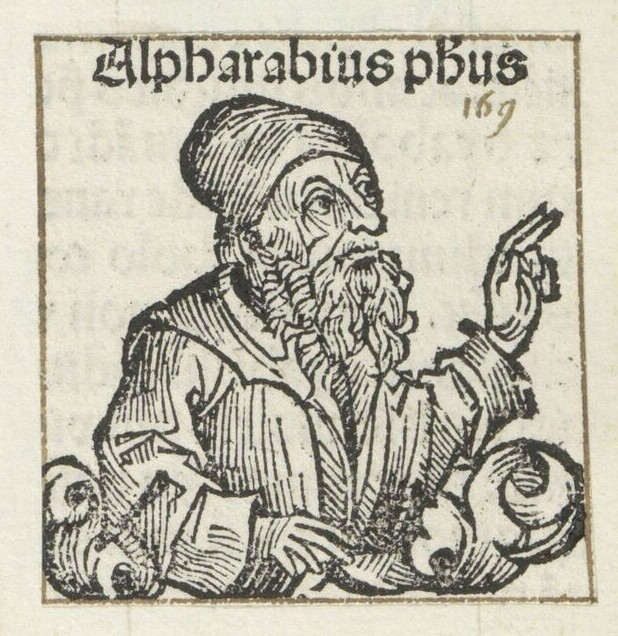
Al-Farabi in the Nuremberg Chronicle (Liber Chronicarum), 1493 · public domain
Origin
Baghdad, ninth and tenth centuries, where the Greek philosophical corpus was translated into Arabic and then argued with.
Central claims
- Demonstration and revelation cannot conflict, because both are true.
- What a thing is and that it is are two different questions.
- Philosophy is owed to the community, not withheld from it.
Criticism
Al-Ghazali argued that the philosophers had smuggled Greek commitments into Islam and contradicted revelation on the eternity of the world and bodily resurrection. A different objection comes from historians: calling the tradition Islamic philosophy obscures how much of it was written by Christians and Jews in the same language and the same rooms.
Development
The translation movement under the Abbasids put Aristotle, Galen and much of Plato into Arabic within about a century. Al-Farabi gave that material a logical architecture, Avicenna rebuilt it into a system of his own, al-Ghazali attacked the system, and Averroes in Córdoba answered the attack by going back to Aristotle's own text.
Legacy
Latin Europe met most of Aristotle through this tradition, in translations made in Toledo and Sicily in the twelfth and thirteenth centuries. Aquinas argues with Avicenna and Averroes on almost every page of the Summa, which is why an account of medieval philosophy that leaves them out has a hole in the middle of it.