Life
Parmenides in their own century
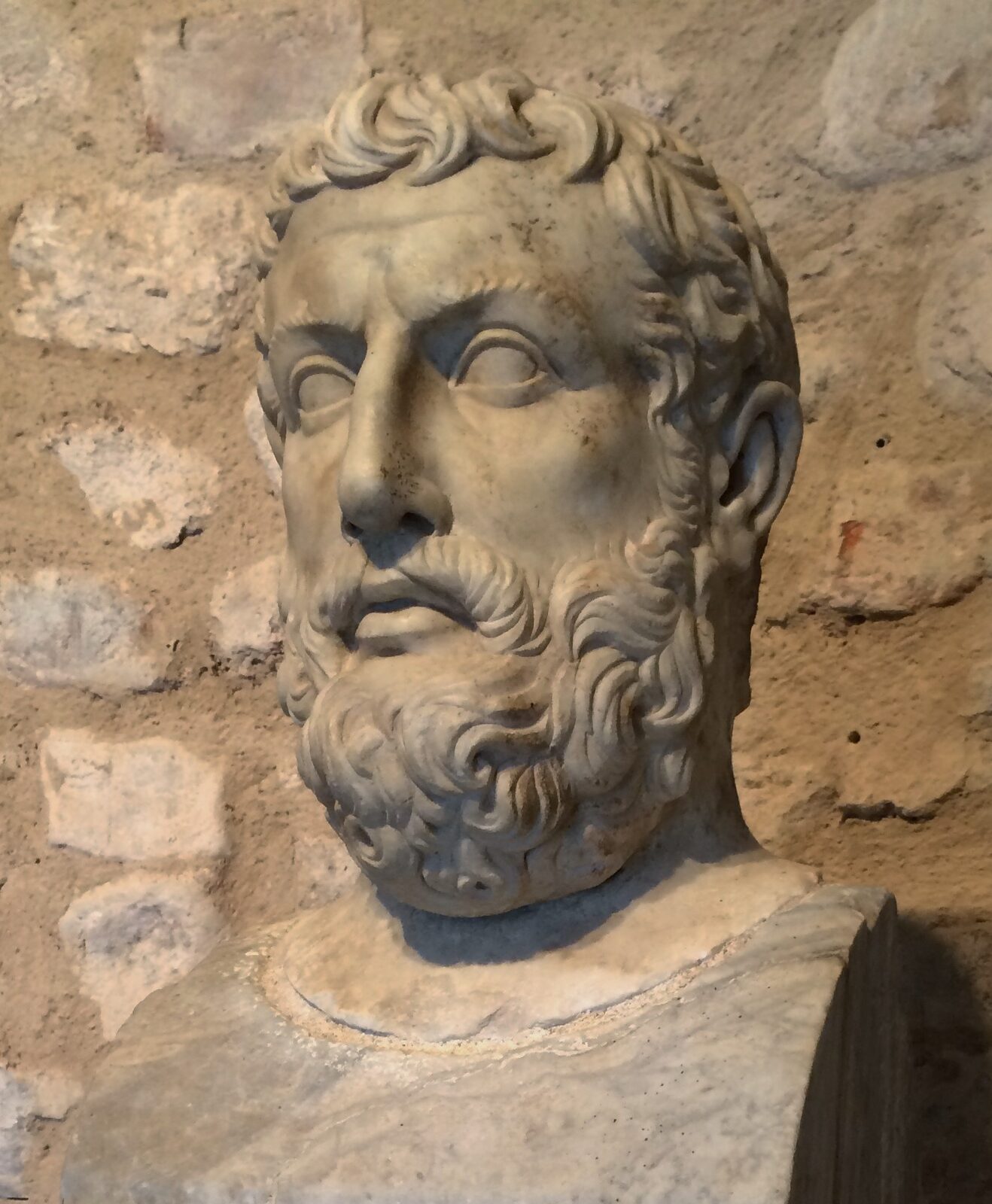
Parmenides came from Elea in southern Italy, a colony founded by refugees from Ionian Phocaea. Substantial fragments of his poem survive, and Plato's dialogue Parmenides shows him in Athens putting hard questions to a young Socrates.
Earlier thinkers had asked what the world is made of. Parmenides asked what can be said or thought of at all, and made that question prior to any account of nature.
Central ideas
What is, is
A goddess sets out two routes of enquiry: that it is, and that it is not. The second cannot even be thought, since there would be nothing there to think of.
The argument against coming to be
If what is came to be, it came from what is not, and nothing comes from nothing. So coming to be and perishing are ruled out, and change belongs to appearance rather than to reality.
The way of opinion
The second half of the poem gives a full cosmology, explicitly labelled the opinions of mortals. Why he includes it at all is still argued over.
Criticism & debate
The poem is compressed and its key terms ambiguous: whether 'what is' means everything that exists, or being itself, or simply whatever one is thinking about, changes the whole argument.
Influence
Plato returned to him repeatedly, in the Parmenides and the Sophist, and the physics of Empedocles, Anaxagoras and the atomists reads as an effort to allow change while conceding his argument.
How to read them
Begin Parmenides with the tension between what is, is and the argument against coming to be. Read the major works slowly enough to notice how biography, public crisis and method shape the argument rather than treating the thinker as a list of doctrines.
If Parmenides is right about what is, is, what habit of judgement would have to change first?