History
Origins, power, and change
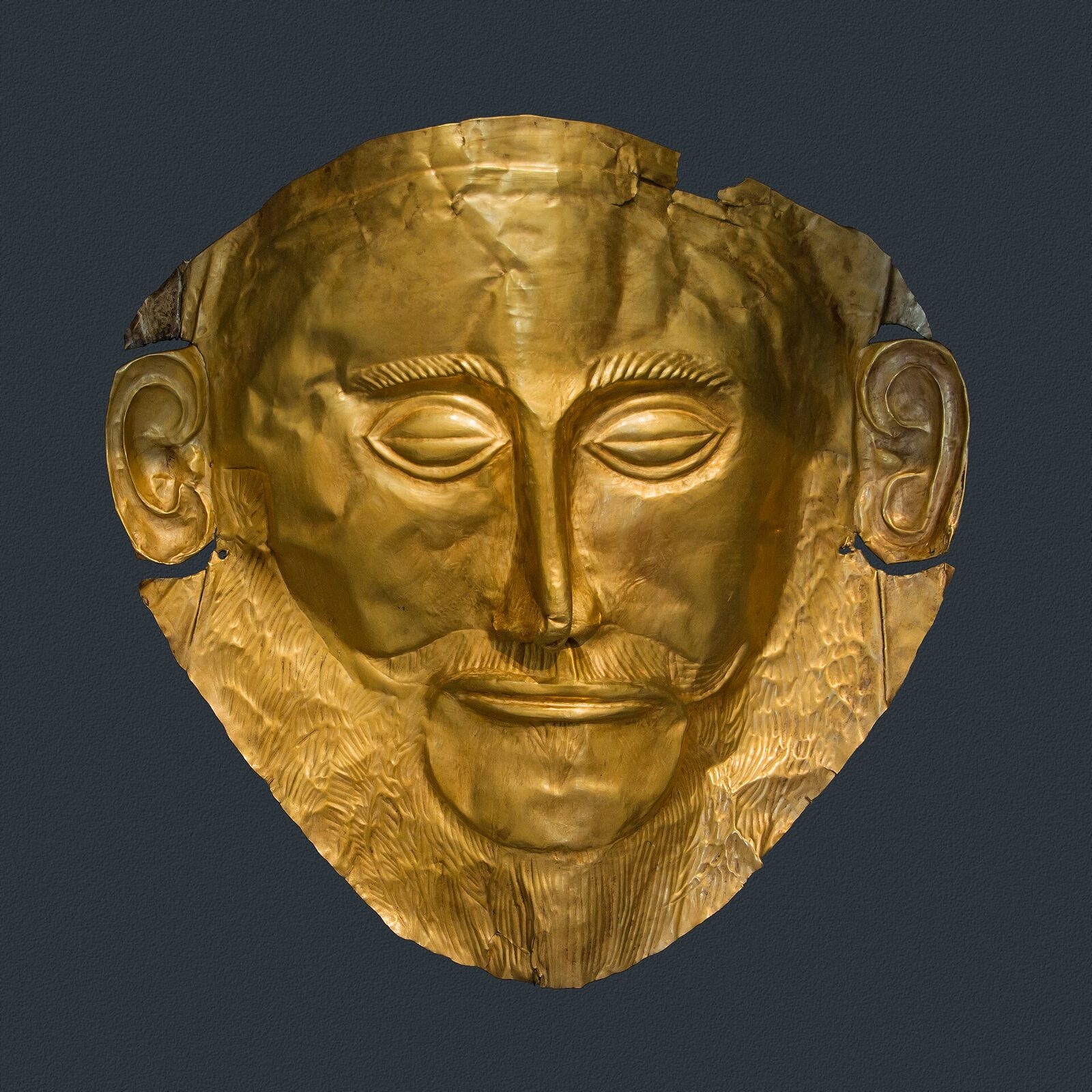
Mycenaean society developed around palatial centres including Mycenae, Tiryns, Pylos, and Thebes. Administrators recorded land, textiles, livestock, offerings, and military obligations in Linear B, the earliest surviving written form of Greek. Monumental citadels and tholos tombs express elite power, while imported materials show connections from Italy and Egypt to Anatolia. Most palaces were destroyed around 1200 BCE amid the wider eastern Mediterranean collapse; political fragmentation and population movement followed, although communities and Greek speech continued beyond the end of palace administration.
Myths from this region
Agamemnon, Menelaus, Clytemnestra, Orestes
The House of Atreus and the War at Troy
Source: Homer, Iliad; Aeschylus, Oresteia
Agamemnon leads the Achaean expedition to Troy, then returns to Mycenae and is murdered, beginning another cycle of vengeance within his house.
Epic and tragedy preserve an imagined heroic past composed centuries after the palaces fell. Archaeological names should not be equated directly with Homeric characters.